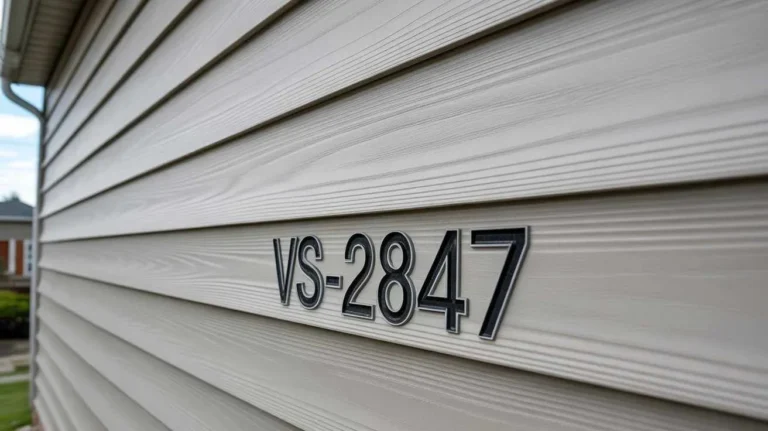
You pull back a damaged panel after a storm, and there it is a row of numbers and letters stamped right onto the back of the vinyl. Most homeowners have no idea what those numbers mean or where to even start. That confusion can lead to ordering the wrong panels, wasting hundreds of dollars, and ending up with a siding mismatch that is visible from the street.
Vinyl siding identification numbers are not random. Every digit carries meaning from the manufacturer and product line to the color and production date. Once you know how to read them, finding a match becomes a much simpler process. At San Diego Home Remodeling, we work through this exact process with homeowners every week, and this guide shares everything you need to know.
Where to Find the Numbers on Your Siding
Before you can decode anything, you need to locate the stamp. Most homeowners never think to look because the numbers are not visible from outside. Here is exactly where to check.
On the Back of the Panel
This is the most reliable spot. Manufacturers stamp vinyl siding identification numbers directly onto the backside of each panel during production. To access them, find a loose panel near a corner, around a window, or at a soffit edge. Gently pull the bottom lip out; you do not need tools for this on most standard installations.
Once you have access, look for raised or printed characters. They are usually found:
- Along the top edge of the panel
- Near the nailing hem (the flat strip at the top with nail slots)
- Down the center backing strip
- On or near the locking channel at the bottom
Take a photo with your phone before you push the panel back. The lighting in that gap is poor, and the numbers are small.
At Panel Edges Near Doors and Windows
On some homes, you can read identification codes at trimmed or cut panel edges near door frames and window casings. Use a flashlight and look closely the text may be small and faded. A magnifying glass helps on older panels.
In the Attic or Crawl Space
Installers almost always leave cut-off pieces in attic spaces, especially near gable ends with vinyl siding. Those leftover scraps are usually protected from sun and weather, so the stamps are still clear and readable. Check up there before assuming the codes are lost.
What the Numbers Actually Mean
This is where most guides fall short. They tell you to find the numbers but not how to read them. Here is a real breakdown of what vinyl siding codes mean and how to use them.
The Manufacturer Code
The first segment of most vinyl siding identification numbers identifies the brand. Major producers like CertainTeed, Alside, Mastic (Ply Gem), Georgia-Pacific, and Kaycan each use a distinct code system. Some stamp a recognizable abbreviation for example, “CT” for CertainTeed or “AS” for Alside. Others use a numeric plant code that you look up through their dealer network.
If you see a logo or brand name stamped directly, your job is easier. Many premium lines include the full brand name right on the panel.
The Product Line or Profile Code
After the manufacturer identifier comes the product line. This tells you the vinyl siding size, the profile shape (dutch lap, beaded, clapboard, shake, or vertical), and the exposure width. Common exposures run from 3 inches on narrow lap profiles up to 8 inches on wide colonial styles.
Vinyl siding dimensions are a critical part of this segment. The most standard exposures are:
- Double 4″ (D4): Two rows of 4-inch exposure per panel, very common on older homes
- Double 4.5″ (D4.5): Slightly wider, popular in mid-range residential builds
- Double 5″ (D5): Common on newer construction across many regions
- Triple 3″ (T3): Three narrow rows per panel, used on craftsman and cottage styles
- Single 6″ or 8″: One wide panel, often used on premium or board-and-batten looks
Understanding the dimensions of vinyl siding is critical when ordering replacements. Even a half-inch difference in exposure width will create a visible mismatch.
The Color Code
This is what most homeowners are hunting for. The vinyl siding color match code is usually a two-to-four character string that corresponds to a specific color in that manufacturer’s catalog. Colors are listed by name in brochures but referenced by code on the panel.
For example, a code like “SW” might stand for “Sandstone White” on one product line, while “BG” could mean “Beige Gray.” These codes vary by brand, so the color code only makes sense once you know the manufacturer.
This is why the order matters: manufacturer first, then product line, then color. Skipping steps leads to mismatches.
The Production Date
Most panels also include a date stamp often formatted as a two-digit year followed by a month abbreviation or week number. This helps you confirm whether your siding was installed during a period when a certain color was still in production. Some colors get discontinued after five to ten years, and knowing the production date tells you whether that color still exists in current stock.
How to Use a Vinyl Siding Code Lookup
Once you have your codes, you have several ways to match them to a product.
Free Online Resources
A vinyl siding code lookup free search will bring up manufacturer websites and dealer portals where you can enter your code and pull up the exact product. CertainTeed, Alside, and Ply Gem all offer online product libraries. Enter your product line code and color code, and the system returns the full product name, current availability, and dealer locations.
The Vinyl Siding Institute (VSI) also maintains resources that help you cross-reference products by profile and color, which is useful when a brand has been acquired or rebranded over the years.
Contacting the Manufacturer Directly
If the online lookup does not return a match, call the manufacturer’s customer service line. Have your full code string ready. Most major brands have technical support teams that handle these requests daily. They can tell you if the product is still in production, whether a close color substitute exists, and which distributors carry it near you.
Bringing the Panel to a Supplier
A local siding supply house or big-box contractor desk can also run the code for you. Bring a cut piece or the clearest photo you have of the stamp. Experienced counter staff at roofing and siding supply houses deal with how to identify vinyl siding manufacturer questions constantly and can often identify a product by sight.
How to Match Old Vinyl Siding by Code
Matching old siding is the most common reason homeowners start digging into vinyl siding identification numbers. Here is the process that actually works.
Step 1: Find and photograph the full code on the back of a panel. Get the entire string, not just part of it.
Step 2: Identify the manufacturer using the first segment of the code. Cross-reference with brand-specific code guides available on most manufacturer websites.
Step 3: Use the product line segment to confirm the vinyl siding size and profile. Pull a panel and measure the exposure width yourself to double-check.
Step 4: Use the color code to search the manufacturer’s current catalog. If the color is discontinued, ask for the closest current match and request a physical sample before ordering.
Step 5: Compare the sample to your existing siding in natural daylight. Color can shift over years of UV exposure, so a perfect code match may still look slightly different next to weathered panels. This is a known issue, and professionals account for it.
If you are doing a partial repair on a visible wall, this weathering difference matters a great deal. For Home Improvement Tips that go beyond what most guides share: always try to use replacement panels on less visible walls or use your repair panels on a secondary elevation where the slight color difference will be less noticeable.
For projects where matching is especially critical such as a front-facing wall repair or when you are working on a Raised Ranch Open Concept exterior where the siding runs across a wide, unbroken facade getting a professional involved early saves money. A contractor can pull panels, read codes, and order samples in one visit rather than three trips to the hardware store.
When Codes Are Missing or Unreadable
Not every panel will have a clean, legible stamp. Sun exposure, paint, and age all degrade the printing. If you cannot read the codes, you still have options.
Measure the panel precisely. The vinyl siding dimensions, specifically the overall panel height, the exposure width, and the thickness narrow down the options significantly. Standard panel thickness runs from 0.040 inches on budget products up to 0.048 inches on premium lines.
Look at the locking mechanism profile. The shape of the top lock and bottom hem is distinct between manufacturers, and experienced contractors can identify brands by that feature alone.
Compare the surface texture. Smooth finishes, wood-grain embossing depth, and gloss levels all vary by brand and product line. Take a close-up photo and compare it to product photos in manufacturer catalogs.
This is also where a project like understanding Outdoor Elevator Cost in 2026 or planning a Kitchen Peninsula vs Island layout differs from siding work; those decisions are mostly about design preference. Siding identification is about precision matching, and when the codes are gone, visual comparison by someone with experience becomes essential.
San Diego Home Remodeling handles these identification challenges as part of every siding repair consultation, so homeowners are not left guessing.
When to Replace Instead of Match
Sometimes matching is not the right call. If your siding is more than 20 years old, the color has likely shifted enough that new panels will look different regardless of the code match. When damage covers more than 20 to 30 percent of one wall, a full wall replacement often costs only marginally more than a partial repair, and the result looks far better.
A San Diego Whole Home Remodeling approach also lets you upgrade the siding profile, improve insulation behind the panels, and address any moisture damage that partial repairs would leave behind. It is worth getting that full picture before committing to a patch.
Conclusion
Reading vinyl siding identification numbers is a skill that saves real money. It takes the guesswork out of repair orders, prevents expensive mismatches, and gives you the information you need to have a productive conversation with any contractor or supplier. The numbers are there on every panel you just need to know where to look and what each segment tells you.
If you have pulled back a panel, read every digit, done the code lookup, and still cannot find a confident match, that is the right time to call in a professional. San Diego Home Remodeling offers siding identification consultations as part of our exterior repair and remodeling services. Our team can read your codes, source current matches, and give you an honest assessment of whether a patch or a full wall replacement makes more sense for your home. Contact us today and get the right answer the first time.
FAQs
What do numbers on vinyl siding mean?
The numbers on vinyl siding are identification codes stamped by the manufacturer. They typically include a brand or plant identifier, a product line and profile code, a color code, and a production date. Reading them in sequence lets you identify the exact product and order a match.
Where are vinyl siding identification numbers located?
They are most often found on the back of the panel, along the nailing hem or the center backing strip. You can also check panel edges near doors and windows, or look at leftover cut pieces stored in attic spaces.
Can I do a vinyl siding code lookup for free?
Yes. Most major manufacturers including CertainTeed, Alside, and Ply Gem offer free product lookup tools on their websites. You can also call their customer service lines and give them the code string to get the exact product name and availability.
How do I identify the vinyl siding manufacturer from the code?
The first segment of the code usually contains a brand abbreviation or plant number. Compare it against the manufacturer’s own code guide, which is available on their website or through a local siding supplier. Experienced contractors can also identify most major brands by the code format and panel lock profile.