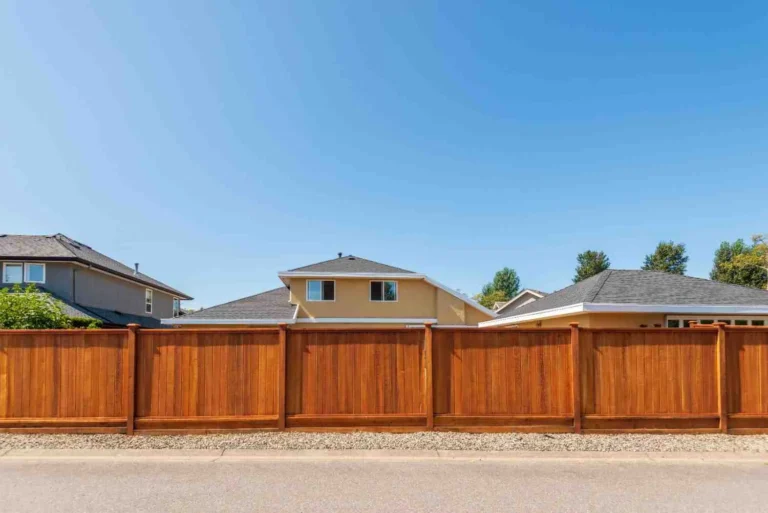
You got three quotes for the same backyard fence, and they came back at $3,200, $6,800, and $9,500. Nothing about your yard changed between calls, so the confusion is fair. How much it costs to build a fence actually depends on a short list of factors, and once you know what they are, those wildly different numbers start to make sense.
At San Diego Home Remodeling, this is one of the questions our team fields almost daily, and this guide lays out the real numbers homeowners in this region are working with in 2026.
Quick Answer: Fence Cost Snapshot for 2026
If you only have a minute, here is the short version:
| Fence Type | Cost Per Linear Foot | 150-Foot Yard (Installed) |
| Chain Link | $8 to $35 | $1,800 to $4,200 |
| Wood | $13 to $45 | $3,000 to $7,000 |
| Vinyl | $30 to $60 | $5,000 to $9,500 |
| Aluminum | $20 to $55 | $3,500 to $8,000 |
| Wrought Iron | $30 to $100 | $6,000 to $14,000 |
Most San Diego County homeowners land between $4,500 and $9,500 for a full residential installation. That is roughly 20 to 30 percent above the national midpoint, mainly because of local labor rates and permitting.
What Determines Your Fence Cost?
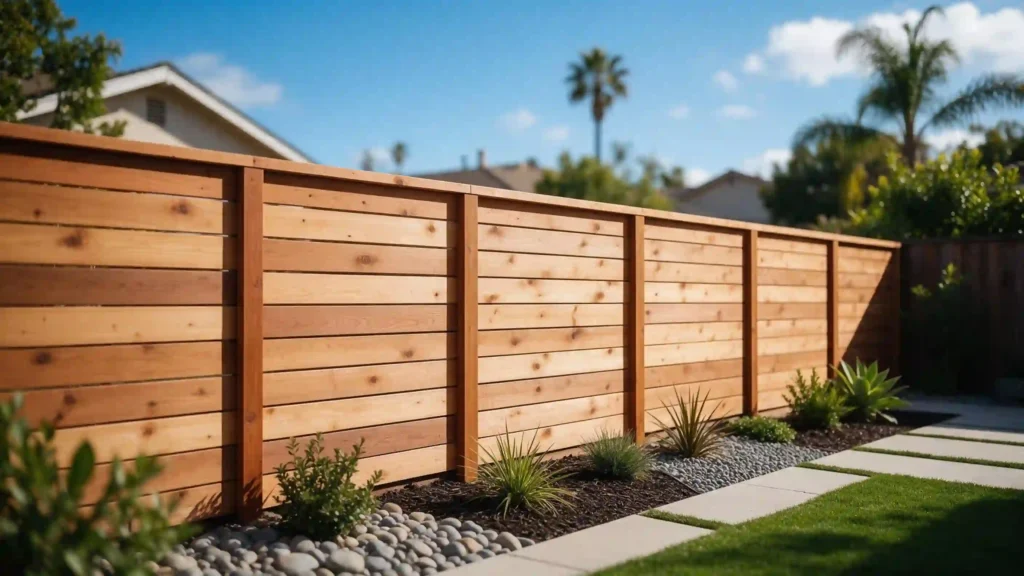
Before comparing quotes line by line, it helps to know what actually moves the needle. Fence installation cost is rarely about one factor alone; it is usually three or four of these stacking together.
Material Choice
This is the single biggest driver. A chain-link run and a wrought iron run of the same length can differ by thousands of dollars.
Fence Height (4 ft vs. 6 ft vs. 8 ft)
Taller fences need more material per linear foot and deeper, sturdier posts to handle wind load, which raises both material and labor costs.
Total Linear Footage & Yard Shape
An irregular lot with angles and jogs costs more per foot than a straight rectangular run because crews spend extra time on custom cuts and corner posts.
Local Labor Rates in San Diego County
Skilled fence labor here runs noticeably higher than the national average, often adding $30 to $50 per linear foot just for installation.
Terrain and Soil Conditions
Hillside lots, decomposed granite, and clay-heavy soil all slow down post-hole digging and can require augers or hand excavation.
Number of Gates, Corners, and Custom Cuts
Every gate, corner bracket, and non-standard angle is additional labor that a flat per-foot estimate often does not capture.
Average Cost to Build a Fence by Material (2026)
Here is what most homeowners actually pay for fence installation, broken down by material, fully installed.
Wood Fence
Cedar remains the go-to choice in Southern California because it naturally resists moisture and insects. Wood fence installation cost typically runs $13 to $45 per linear foot, with pressure-treated pine sitting at the lower end and cedar privacy panels at the higher end.
Vinyl Fence
Vinyl costs more upfront, usually $30 to $60 per linear foot, but skips the recurring cost of staining or sealing. Over a decade or more, many homeowners find it evens out or comes out ahead financially.
Chain Link Fence
At $8 to $35 per linear foot, chain link remains the most budget-friendly option, especially for larger properties or pet containment where privacy is not the priority.
Aluminum Fence
Aluminum runs $20 to $55 per linear foot. It holds up well around pools and front yards, resists rust, and needs almost no maintenance, though it offers limited privacy.
Wrought Iron Fence
The premium tier. A basic 4-foot wrought iron section starts around $30 per linear foot, while a 6-foot security-grade installation can reach $100 per linear foot.
Composite Fence
Composite blends wood fibers with recycled plastic and typically costs $25 to $50 per linear foot. It is a middle-ground option for homeowners who want the wood look without the upkeep.
Fence Cost by Height: How Much Extra Do Taller Fences Add?
Height changes your material takeoff more than most homeowners expect. Moving from a 4-foot fence to a standard 6-foot privacy height typically adds 25 to 40 percent to material cost because you need taller pickets, longer posts, and often deeper concrete footings to keep the structure stable. Going from 6 feet to 8 feet, which some HOAs restrict, can add another 20 percent on top of that, plus the likelihood of needing a variance or special permit approval.
Total Project Cost by Yard Size
Small Yard (around 100 linear feet)
Chain link runs $1,200 to $2,800, wood privacy runs $2,000 to $4,500, and vinyl runs $3,500 to $6,500.
Average Yard (around 150 linear feet)
Chain link runs $1,800 to $4,200, wood privacy runs $3,000 to $7,000, and vinyl runs $5,000 to $9,500.
Large Yard (200 or more linear feet)
Chain link runs $2,500 to $6,000, wood privacy runs $4,000 to $10,000, and vinyl can exceed $13,000.
Privacy Fence Installation Cost: What to Expect
A privacy fence is almost always built to a 6-foot height, which means it carries the added material cost discussed above. For wood, budget $13 to $45 per linear foot depending on the wood species. For vinyl at the same height, plan on $30 to $60 per linear foot. Labor alone typically accounts for roughly half of that total, and in this region labor for privacy fence work often runs $30 to $50 per linear foot on its own. One detail competitors rarely spell out: if your lot has any grade change, expect a 15 to 30 percent labor surcharge, since sloped ground requires stepped or racked panel installation to keep the fence line looking level.
Fence Gate Installation Cost
A fence without a working gate is just a wall around your property, so budget for this separately rather than assuming it is folded into a per-foot quote. A standard single pedestrian gate, about 4 feet wide, runs $200 to $600 depending on material and hardware. A double drive gate wide enough for a vehicle runs $400 to $1,200. Automatic gate openers, increasingly common in higher-end San Diego neighborhoods, add another $800 to $3,500 depending on the drive system and safety sensors required.
San Diego Neighborhood Fence Cost Breakdown
Coastal Areas (La Jolla, Del Mar, Encinitas, Solana Beach)
Coastal properties often carry higher costs because of salt-air corrosion concerns, which pushes more homeowners toward vinyl, aluminum, or coated wrought iron rather than untreated wood. Sandy soil near the coast is also easier to dig than inland clay, which can offset some of the labor premium.
Inland & Valley Areas (El Cajon, Poway, Escondido, La Mesa)
Inland lots frequently sit on harder, rockier soil that slows post installation. Wood fencing remains popular here since salt exposure is not a factor, but larger lot sizes in these areas mean total linear footage, and therefore total cost, tends to run higher even at similar per-foot pricing.
Hidden Costs That Change Your Final Bill
Permits
Most San Diego jurisdictions require a building permit for new fence construction. Fees typically run $50 to $200, though some municipalities add impact fees that push the total to $300 to $500.
Old Fence Removal
Removing and hauling away an existing fence adds $300 to $750 for a standard residential job, or roughly $3 to $7 per linear foot.
Site Preparation
Clearing shrubs, roots, or overgrowth along the fence line runs $110 to $245 per hour, and removing a tree that blocks the line can add $200 to $2,000 depending on its size.
Soil Conditions
Rocky or dense clay soil often requires power augers and extra crew hours, which can add 20 to 40 percent to your labor total.
Coastal Commission & HOA Rules That Can Affect Your Fence Permit
This is a step homeowners in other parts of the country never have to think about. Properties near the San Diego coastline can fall under California Coastal Commission review, which regulates fence height and placement to protect public view corridors and beach access. HOA communities layer on their own restrictions, often dictating approved materials, colors, and maximum height regardless of what the city itself allows. Before you finalize a design, check both your HOA covenants and your property’s coastal zone status, since a fence that meets city code can still get flagged and require modification if it violates either of these separate rule sets.
Real San Diego Fence Quotes: What Homeowners Actually Paid
To make this concrete, here is how a typical quote breaks down for three common scenarios our team sees regularly in this market.
A 120-linear-foot cedar privacy fence on a flat inland lot, with one single gate and standard permitting, usually lands between $4,200 and $5,600 once materials, labor, permit fees, and gate hardware are added together. A 150-linear-foot vinyl fence on a sloped coastal lot, which requires the grade surcharge and salt-resistant hardware, typically runs $7,500 to $9,800. A 200-linear-foot chain-link enclosure for a larger inland property with two gates comes in around $3,000 to $4,800. These ranges reflect the kind of project variation you should expect when comparing your own quotes, and any bid that falls far outside these bands deserves a closer look at what is or is not included.
DIY vs. Professional Fence Installation
Doing the labor yourself can cut roughly 50 percent off your total, with a DIY wood fence typically running $850 to $2,200 in materials alone. That said, permit applications and inspection scheduling fall entirely on you; post-depth mistakes are a common cause of early fence failure in shifting California soil, and vinyl or aluminum manufacturers often void warranty coverage on self-installed systems. DIY makes the most sense on flat, straight lots with a simple chain link or picket design. For privacy fencing on any grade change, or for vinyl and aluminum systems that are unforgiving about post spacing, professional installation protects both your fence and your home’s value.
How to Lower Your Fence Installation Cost
A few practical adjustments can meaningfully reduce your total without cutting corners on quality. Choosing a simpler picket pattern instead of decorative caps or scalloped tops can save 10 to 20 percent on material. Reducing the number of posts by widening panel spacing where local code allows saves on both material and labor, since post-setting is one of the most time-intensive parts of the job. Getting three itemized quotes rather than one lets you spot where a bid is padded versus where it genuinely reflects site difficulty. Handling old fence removal or site clearing yourself before the crew arrives can also shave a few hundred dollars off the final invoice.
Repair or Replace: Which Makes Sense for Your Fence?
If your fence is under 10 years old, has isolated damage, and the posts are still solid, repair is usually the more cost-effective route. Full replacement makes more sense once a fence is 15 to 20 years old, shows widespread rot or rust, no longer meets current code, or has had multiple repair attempts that have not held up. A quick way to tell: if more than a third of the fence line needs work, the labor cost of patchwork repair often approaches what a full replacement would run anyway.
Does a New Fence Increase Your Home’s Value in San Diego?
A well-installed fence can recoup a meaningful share of its cost in resale value, particularly in a market where outdoor living space and privacy carry real weight with buyers. This is one reason fencing frequently shows up as a line item in larger exterior projects. If you are planning a broader San Diego Whole Home Remodeling project, coordinating fence work alongside other exterior upgrades often reduces overall labor costs since crews and permits can be scheduled together rather than handled as separate projects months apart.
Best Time of Year to Install a Fence in San Diego
Unlike colder climates where frozen ground halts fence work entirely, San Diego’s mild winters mean installation is possible nearly year-round. That said, late fall through early winter tends to be the slower season for local fencing crews, which can translate into better scheduling availability and occasionally more competitive pricing. The main window to avoid is the peak of the rainy season, typically January into early March, when saturated soil makes post-hole digging and concrete curing less predictable.
Why San Diego Homeowners Pay More (And Why It Is Worth It)
California fence installation consistently runs 20 to 30 percent above the national average, driven by higher wages, stricter permitting, and elevated material costs. A project that runs $5,000 in a lower-cost state might land at $6,500 to $7,000 here. In exchange, a properly installed fence in this market extends usable outdoor space, clearly defines property lines, and adds genuine curb appeal, all of which hold real weight in San Diego’s resale market.
Final Thoughts
Once you understand what actually drives the price, a fence quote stops feeling like a mystery. Material, height, terrain, labor rates, and hidden add-ons like permits and gates each play a role, and knowing where your project falls on each of these factors puts you in a much stronger position at the negotiating table.
Whether you are budgeting for a basic chain link boundary or a full privacy fence with gates, San Diego Home Remodeling is ready to walk you through a clear, honest estimate built around your specific property. Contact us today to get a straightforward assessment before you commit to a quote.
Frequently Asked Questions
How much does it cost to build a fence for an average San Diego yard?
Most homeowners in this region spend between $4,500 and $9,500 for a full residential fence installation. The exact number depends on material, linear footage, terrain, and the number of gates involved.
What is the cheapest privacy fence option available?
Pressure-treated pine is typically the most affordable privacy fence material, running $13 to $25 per linear foot installed. It does require sealing every two to three years to hold up well in Southern California’s climate.
Do I need a permit to install a fence in San Diego?
In most San Diego jurisdictions, yes, particularly for fences over 6 feet tall. Permit fees generally range from $50 to $300 depending on the municipality, and coastal or HOA properties may face additional review.
Is vinyl or wood better for a privacy fence here?
Both work well but suit different priorities. Wood costs less upfront and has a warmer look, while vinyl costs more initially but holds up better against UV exposure and coastal humidity over a 15- to 20-year span.
How long does it typically take to install a fence?
A professional crew usually completes a 150-linear-foot fence in two to four days, depending on terrain and gate count. DIY installation of the same project often stretches across two or more weekends.