
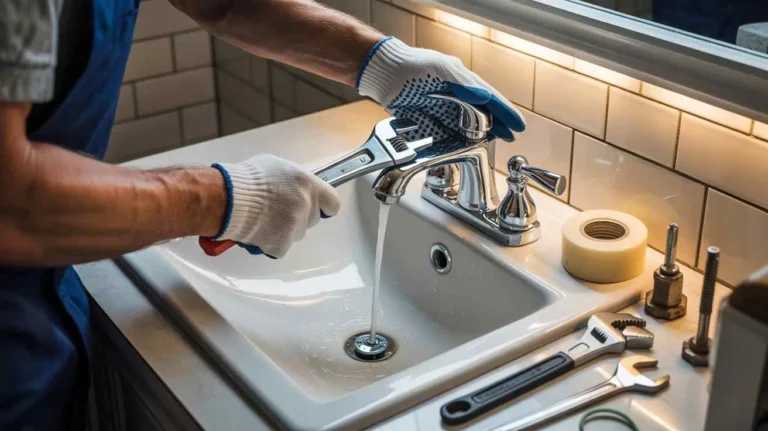
A dripping faucet at 2 a.m. has a way of turning into a weekend project. If you’ve been putting off learning how to replace a bathroom faucet because it sounds like a job for a licensed plumber, the reality is simpler than most people expect. With the right prep work, most homeowners finish the job in a single afternoon, no specialty license required.
At San Diego Home Remodeling, we’ve walked enough clients through this repair to know where people actually get stuck, and it’s rarely the wrench work. It’s the decisions made before the first bolt ever gets loosened, from faucet type to sink fit.
Quick Answer
Faucet replacement typically takes 45 to 90 minutes and costs between $15 and $250 in materials if you do it yourself, or $150 to $400 if you hire a plumber. The job is beginner to intermediate difficulty, and the biggest variable isn’t skill; it’s whether your shutoff valves under the sink still work properly. If those valves are corroded or won’t close all the way, that single issue turns an easy DIY faucet replacement into a bigger repair.
Signs You Need to Replace Your Bathroom Faucet (Not Just Repair It)
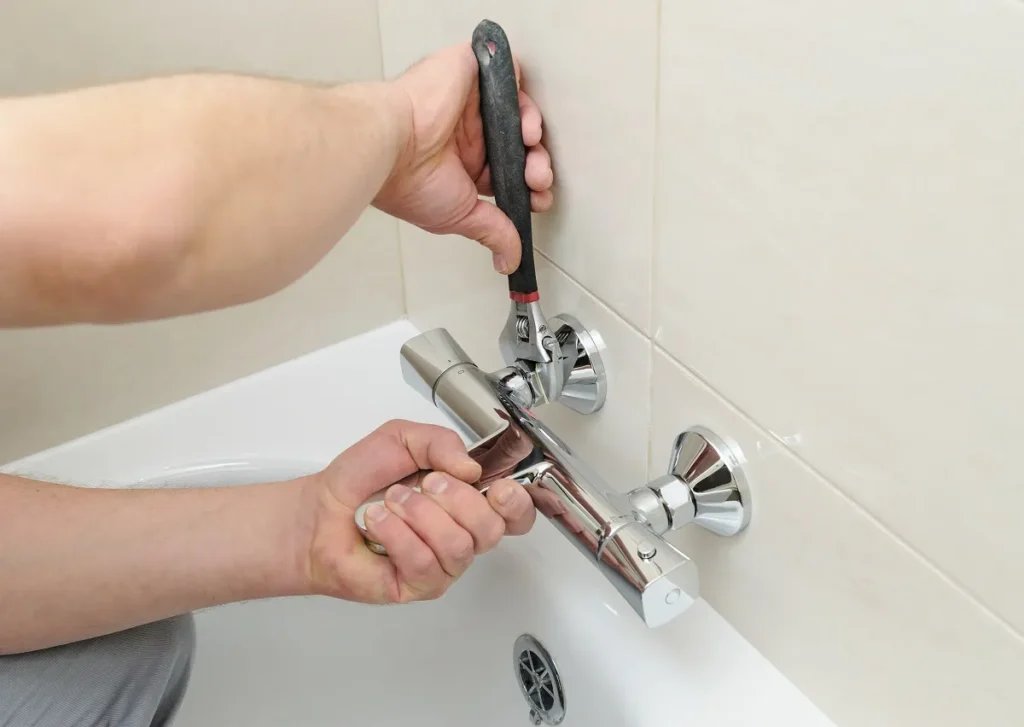
Not every faucet problem calls for a full swap. A worn washer or a dried-out O-ring can often be fixed for a few dollars without touching the whole fixture. But there’s a point where patching stops making sense.
If the faucet still drips after you’ve replaced the cartridge, the valve seat, or the fixture body itself has likely worn past the point of repair. Greenish staining or flaking around the base is another tell, especially in homes where the faucet hasn’t been touched since the original build. A sudden drop in water pressure at just one fixture, while everything else in the bathroom works fine, usually points to mineral buildup inside the faucet body that cleaning alone won’t fix.
There’s also a practical trigger we see constantly in the field: a vanity refresh. Homeowners repaint or swap countertops, and suddenly the old faucet looks out of place next to everything new. That single decision to replace one fixture is often what starts a larger conversation about bathroom remodeling in San Diego, since once the faucet changes, the mismatch with the rest of the room becomes obvious.
Types of Bathroom Faucets: Single-Hole, Centerset, and Widespread
This is the step most guides skip, and it’s the one that causes the most returned faucets at hardware stores. Before you can even shop for a replacement, you need to know what configuration your sink actually has.
A single-hole faucet has one hole in the sink deck, and the handle and spout come as one unified piece. A centerset faucet uses three holes spaced four inches apart on center, with the handles and spout mounted on a single base plate. A widespread faucet also uses three holes, but they’re spaced six to eight inches apart, with the hot handle, cold handle, and spout installed as three completely separate pieces connected underneath the sink by flexible hoses.
How to Measure Your Sink’s Hole Spacing Before You Buy
Measure center to center between the two outer holes in your sink deck. Under 4 inches typically means single-hole. Right around 4 inches is centerset. Anything from 6 to 8 inches or more is widespread. Buying the wrong configuration is the single most common reason DIYers end up making a second trip to the store mid-project, so confirm this measurement before you place an order.
You may also read: How to Unclog Bathroom Sink.
Repair, Replace, or Call a Plumber? A Quick Decision Guide
Use this as a fast gut-check before you commit to a full faucet replacement:
- Repair it if the faucet is under 5 years old, the drip started recently, and you haven’t replaced the cartridge yet.
- Replace it yourself if the shutoff valves under the sink turn freely and close fully, your new faucet matches your existing hole configuration, and you’re comfortable working in a tight cabinet space for under two hours.
- Call a plumber if the shutoff valves are seized or won’t fully close, you see signs of a leak inside the wall or cabinet floor, or your new faucet requires a different number of holes than what your sink currently has.
That last scenario is more common than people expect, since faucet styles have shifted toward single-hole designs over the past decade, while a lot of older sinks were drilled for widespread setups.
Tools and Materials You Will Need
Gather everything before you shut off the water. A mid-project hardware run with your bathroom out of commission is nobody’s idea of a good afternoon.
- Basin wrench or adjustable wrench: The long handle on a basin wrench reaches the cramped space behind the sink basin where a standard wrench can’t get.
- Plumber’s putty or silicone sealant: Seals the gap between the faucet base and the sink surface.
- Plumber’s tape: Wrapped around threaded connections to stop leaks at the supply line joints.
- Bucket and old towels: Residual water always drips out when you disconnect lines, even with the supply off.
- Flashlight or headlamp: Under-sink cabinets are dark, and you’ll be working by feel as it is.
- New faucet and supply lines: Replace the supply lines even if the old ones look fine. They’re inexpensive, and reusing old, brittle lines is a common cause of leaks weeks after a faucet is replaced.
Safety Precautions Before Starting
Shut off the water at the individual valves under the sink, not just the main house valve. Turn each handle clockwise until it stops, then open the faucet to release trapped pressure and confirm the water is actually off before disconnecting anything. Clear the cabinet completely so you have room to lie on your back, and keep a towel down to protect your knees. If you’re reaching into a tight cabinet, safety glasses are worth wearing since you’ll often be looking straight up while working around old, sometimes corroded, fittings.
Step-by-Step Guide to Replace a Bathroom Faucet
Step 1: Turn Off the Water Supply
Find the hot and cold shutoff valves under the sink and turn both clockwise until fully closed. If your bathroom doesn’t have individual shutoffs, which is common in homes built before the late 1990s, shut off the main water supply to the house instead. Open the faucet afterward to drain any pressure left in the lines.
Step 2: Disconnect the Water Supply Lines
Using a basin wrench or adjustable wrench, loosen the nuts connecting the supply lines to the bottom of the faucet. Keep a bucket underneath, since a small amount of trapped water escapes even after the valves are closed. This is where a basin wrench earns its keep, reaching into the narrow gap behind the basin that your hand can’t access.
Step 3: Remove the Old Faucet
Locate the mounting nuts holding the faucet to the sink or countertop. They’re usually set further back than expected and coated in mineral deposits, so patience matters more than force here. Once the nuts are off, lift the old faucet out from above. A putty knife worked gently around the base will break an old caulk or putty seal if the fixture is stuck.
Step 4: Clean the Sink and Remove Old Caulk or Putty Residue
Scrape away any leftover putty, caulk, or gasket residue from the sink deck with a plastic putty knife, then wipe the area down with rubbing alcohol. This step gets skipped more often than it should, and leftover grime is one of the fastest ways to end up with a faucet base that never seals properly, no matter how carefully you install the new one.
Step 5: Install the New Faucet
Apply a thin bead of plumber’s putty or silicone around the base if your model calls for it, or use the manufacturer’s rubber gasket if one is included. Set the faucet into the mounting holes and secure it from underneath, hand-tightening first, then finishing with a wrench for the final quarter turn. Rushing straight to the wrench is one of the fastest ways to crack a porcelain sink or strip a plastic mounting nut.
Step 6: Connect the Water Supply Lines
Wrap plumber’s tape around the threaded connections, then attach the new supply lines to both the faucet and the shutoff valves. Hand-tighten first, then snug with a wrench, being careful not to overtighten, which can crack the fitting or damage the internal washer.
Step 7: Replace the Sink Drain (Optional, If Your Kit Includes One)
Many faucet kits come bundled with a new pop-up drain assembly. If yours does, this is the easiest time to swap it, since the cabinet is already cleared and the old plumbing is already exposed. Disconnect the P-trap, remove the old drain flange, and install the new one with a fresh plumber’s putty before reconnecting the trap.
Step 8: Test the Faucet
Turn both shutoff valves back on slowly and check every connection for drips. Run hot and cold water for a few minutes, watching underneath the entire time. A brief sputter of air as the lines refill is normal, but steady water should flow smoothly within seconds.
You may also read: How to Remove Bathroom Sink Stopper in Easy Steps.
Troubleshooting: When Things Do Not Go as Planned
If you spot a leak after turning the water back on, check whether the connection is loose before assuming something’s damaged. Most post-installation leaks come from a fitting that needed one more quarter turn, not a defective part. If pressure feels weak, check the aerator on the faucet tip, since aerators can shift loose during shipping and a quarter turn often fixes it. A wobbly handle usually means the mounting nut underneath needs tightening.
How Long Does It Take to Replace a Bathroom Faucet?
Budget 60 to 90 minutes for your first attempt, factoring in the learning curve of a tight cabinet space. Once you’ve done it once, a second faucet replacement in the same house typically takes closer to 30 minutes, since you already know where the shutoffs are and how the hardware behaves.
Cost to Replace a Bathroom Faucet
| Approach | Typical Cost | What’s Included |
| DIY | $15 to $250 | Faucet, supply lines, sealant, labor free |
| Professional plumber | $150 to $400 | Installation labor, adjustments, disposal of old fixture |
Faucet prices themselves range from around $40 for budget models to $300 or more for designer fixtures. If you’re already planning a larger bathroom remodeling project in San Diego, bundling faucet replacement into that scope often saves money, since labor and material delivery are already accounted for.
How Much Water (and Money) You Save by Replacing an Old, Leaking Faucet
A faucet dripping at roughly one drip per second wastes around 3,000 gallons of water per year, according to EPA WaterSense data. At an average municipal water rate, that adds up to $30 to $70 annually from a single leaking fixture, not counting the wear it puts on your cabinet floor and cartridge seals over time. Replacing an aging faucet with a WaterSense-labeled model also reduces flow without sacrificing pressure, which is a detail that rarely gets mentioned but adds up across a household with multiple bathrooms.
Choosing a Finish That Matches Your Bathroom Hardware
Finish mismatches are one of the more common regrets after a faucet replacement. Brushed nickel, matte black, and polished chrome all read differently under bathroom lighting, and a finish that looked right online can clash with your existing towel bars, drawer pulls, or shower trim once it’s installed. A simple rule that holds up well: match your faucet finish to your cabinet hardware first, since that’s the metal your eye lands on most often, and treat the shower fixtures as a secondary consideration.
Common Mistakes to Avoid
Overtightening mounting nuts is the most frequent mistake, and it can crack porcelain or strip plastic threads on budget faucets. Skipping sealant, or using the wrong type for your faucet’s mounting style, leads to slow leaks around the base months later. Many people also skip testing the shutoff valves before starting, only to discover mid-project that a valve won’t fully close, turning a simple faucet replacement into an emergency call to shut off the main line.
Pro Tips for a Smooth Installation
Take a photo of the under-sink plumbing before disconnecting anything. It sounds unnecessary until you’re staring at three hoses an hour later trying to remember which one went where. Buy supply lines slightly longer than you think you’ll need. It’s far easier to tuck away extra slack than to discover the lines don’t reach after everything else is installed.
Maintaining Your New Faucet for the Long Term
Wipe down the base weekly to prevent mineral buildup from hard water, and clean the aerator every few months by unscrewing it and rinsing out sediment. Avoid abrasive cleaners on finished surfaces like matte black or brushed nickel, since they wear down the coating faster than plain soap and water. A faucet installed correctly and maintained this way should easily last 15 to 20 years before you’re back here again.
Final Thoughts
Once you understand your sink’s configuration and take the prep work seriously, learning how to replace a bathroom faucet stops feeling like a plumber’s job and starts feeling like a manageable Saturday project. If your faucet swap turns into something bigger along the way, contact San Diego Home Remodeling and we’ll help you figure out the right next step.
FAQs
Can I replace a faucet myself?
Yes, learning how to replace a bathroom faucet is one of the more approachable DIY plumbing tasks as long as your shutoff valves are functional. Most homeowners with basic hand tools can complete a faucet replacement in under two hours.
Do all faucets fit every sink?
No, faucets come in single-hole, centerset, and widespread configurations, so your replacement needs to match the number and spacing of holes already in your sink. Measuring before you buy prevents a frustrating return trip to the store.
Can I reuse my old supply lines?
It’s not recommended, since old supply lines can be brittle or corroded in ways that aren’t visible from the outside. New lines cost very little and remove one of the most common causes of leaks after a faucet replacement.
Do I need to replace the shutoff valves too?
Only if they’re corroded, stuck, or won’t fully close when you test them before starting. If your valves turn smoothly and shut off completely, you can typically reuse them during a bathroom faucet replacement without issue.
Why does my new faucet handle feel loose or wobbly?
This almost always means the mounting nut underneath the sink needs an additional quarter turn with a wrench. Check that connection before assuming there’s a defect in the faucet itself.