A cracked slab. A leaking drain line inside a cabinet nobody checks for weeks. A sink that shifted because the epoxy never fully cured. These are the kinds of problems that turn a straightforward granite and sink installation into an expensive redo, and they almost always trace back to one skipped step.
This guide breaks down the process the way it actually happens on a job site, not the simplified version from a five-minute video. Whether you’re tackling part of the work yourself or comparing quotes before hiring someone, you’ll find practical details here that most guides leave out. San Diego Home Remodeling has completed hundreds of countertop and sink projects across the region, and the insights below come directly from that field experience.
Choosing the Right Sink Type: Drop-In vs Undermount
The sink style you choose determines how the granite gets cut and how much the project costs.
A drop-in sink sits inside a cutout with its rim resting on top of the stone. The rim is visible, so water and crumbs collect along that edge over time, but installation is faster and less expensive, making it a good fit for secondary sinks or budget-conscious bathrooms.
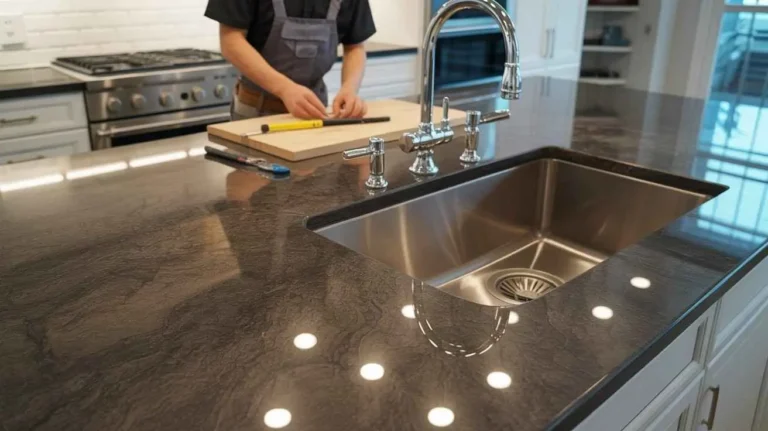
An undermount sink attaches to the underside of the granite, leaving a clean, uninterrupted surface with no rim to trap debris. Undermount sink installation requires more precise cutting and a stronger bonding method, but it’s the standard choice in most kitchen remodels because of how much easier it makes daily cleanup.
Matching Sink Material to Granite: Stainless Steel, Composite, Fireclay, and Cast Iron
Choosing the sink material matters as much as choosing the sink style, and it’s a step many homeowners skip until they’re overwhelmed in a showroom.
Stainless steel is the most common pairing with granite because it’s lightweight and affordable, though it can amplify noise without a sound-dampening pad.
Granite composite sinks are crushed granite mixed with resin, matching natural granite almost seamlessly in tone. They’re heavier and more scratch-resistant, a good fit for households that cook daily.
Fireclay sinks offer a glossy, classic look and hold up well to heat, but they’re significantly heavier, so check the cabinet underneath for adequate support.
Cast iron sinks with a porcelain coating are durable and quiet but the heaviest option here, often needing mechanical clips in addition to epoxy since weight alone can stress the adhesive bond over time.
Matching sink material to your cabinet structure and daily use habits prevents problems that surface months after installation.
Tools and Materials Checklist for Granite and Sink Installation
Granite doesn’t forgive mistakes, and a bad cut can’t be patched, so having the right tools staged before you start matters.
For the cutout and installation: diamond-tipped wet saw or circular saw with a diamond blade, angle grinder with polishing pads, jigsaw with a diamond or carbide blade, wet/dry vacuum, level, measuring tape, 100 percent waterproof silicone caulk color-matched to the stone, two-part epoxy adhesive rated for stone, sink clips or mounting brackets, and safety glasses and gloves.
For the plumbing: adjustable wrench, basin wrench, plumber’s putty or silicone, P-trap assembly, supply lines, and a drain assembly with strainer.
Laying everything out ahead of time means you won’t be searching for a missing part mid-cut, which is exactly when rushed mistakes happen.
Pre-Installation: Does Your Cabinet Need Reinforcement?
This step gets skipped constantly, and it’s one of the more expensive mistakes to fix later. Granite typically weighs 15 to 20 pounds per square foot, so a standard 10-foot countertop run can weigh 300 pounds or more before adding the sink.
Standard base cabinets aren’t built to permanently support that weight, especially around a sink cutout where structural support is already reduced. Before setting the slab, check three things: cabinet corners and seams should be solid without flex, overhangs beyond six inches generally need a corbel or steel bracket, and slabs under 1.25 inches thick usually need plywood underlayment to prevent cracking near the sink opening. Skipping this doesn’t always cause immediate problems, but a slight sag can create a hairline crack a year or two later, and by then the fix requires pulling the countertop back off.
How to Install Granite Countertops with a Sink: Step-by-Step
This is the full process for a standard granite countertop installation with an integrated sink.
Step 1: Measure and Template the Space
Professional fabricators typically create a physical or digital template of the cabinet run before cutting any stone. For DIY, use rigid cardboard or luan board to trace the exact shape, marking the sink base location and wall angles. Measure the sink and mark its footprint on the template, since most undermount sinks need an opening slightly smaller than the sink’s outer rim so the stone overlaps and supports it from below. Always check the manufacturer’s spec sheet before cutting.
Step 2: Cut the Countertop Opening for the Sink
This is where mistakes become permanent. Use a diamond blade jigsaw or circular saw on a padded surface, keeping the stone wet throughout the cut to prevent overheating and cracking. Follow your template line exactly and cut slowly. Once cut, use a diamond polishing pad on an angle grinder to smooth the edge inside the cutout, since a rough, unpolished edge is weaker exactly where it needs to bear weight.
Step 3: Apply Silicone and Set the Countertop
Run a bead of 100 percent silicone along the top edges of the base cabinets, then lower the granite into position. This should never be done alone given the weight involved. Once set, check the surface with a level and shim any low points. Let the silicone cure fully, typically 24 hours, before applying weight or continuing.
Step 4: Mount the Undermount or Drop-In Sink
For undermount sink installation, work from below. Apply a thick, even bead of two-part epoxy around the rim of the sink opening, then press the sink into position, using bar clamps, suction cups, or a temporary brace to hold it steady while the epoxy sets. For heavier sinks like cast iron or fireclay, add mounting clips anchored into the cabinet frame for extra support, and let the epoxy cure the full time on the label, usually 24 hours, before removing clamps.
Drop-in sinks are simpler. Apply plumber’s putty or silicone around the rim, lower the sink into the opening, and secure it from below with mounting clips.
Step 5: Reconnect Plumbing and Garbage Disposal
Apply plumber’s putty under the strainer flange, insert it into the drain opening, and tighten the mounting nut from below, wiping away excess putty. Connect the drain tailpiece to the P-trap, then to the wall drain line, sloping slightly downward for proper drainage. Reconnect hot and cold supply lines, hand tightening first and snugging with a wrench without overtightening.
If a garbage disposal was removed, reinstall it by mounting it to the sink flange and reconnecting electrical and drain lines. Run water and check for leaks at every joint before calling the job finished.
Sealing and Protecting Your Granite After Installation
Granite is porous, and an unsealed surface will absorb oil and other liquids within minutes, leading to staining around the sink where moisture exposure is constant.
Most fabricators apply a penetrating sealer immediately after installation, lasting one to three years depending on density and use. To test if resealing is needed, place a few drops of water on the surface near the sink. If it beads up, the seal is working. If it soaks in quickly, clean the surface, apply sealer in thin, even coats, let it sit per the label, and wipe away excess before it dries. Skipping this step is a common reason granite ends up dull and stained within a year, even when the sink work itself was done correctly.
How to Check Your Installation Was Done Right
Before calling the job complete, run through this quick inspection. Press firmly on the sink from multiple angles to check for movement, which would indicate the adhesive bond didn’t fully cure. Run water into the sink for several minutes while checking underneath for drips at the drain, P-trap, or supply lines. Check the silicone seal around the rim for consistent coverage with no gaps, since even a small one can let water seep into the cabinet over months, and place a level across the countertop in a few spots, since a slight tilt near the sink cutout can indicate the slab wasn’t fully supported during setting.
Granite and Sink Installation Cost Breakdown
At San Diego Home Remodeling, costs for this kind of countertop and sink project vary based on sink type, scope of work, and whether it’s done professionally or as a DIY project.
Granite countertop installation, including material and labor, typically runs 45 to 200 dollars per square foot depending on grade and edge profile. Undermount sink installation, assuming the countertop is already in place, generally costs 200 to 500 dollars in labor, while a basic drop-in kitchen sink installation runs 150 to 350 dollars, and a full setup with a new faucet and supply lines falls between 300 and 700 dollars.
As a complete package, the full project for a standard kitchen usually totals between 1,500 and 5,000 dollars or more, depending on slab size and sink material.
Homeowners planning a bathroom project alongside this work often find it more cost-effective to bundle countertop and sink installation with a broader renovation. If that applies to you, our Bathroom Remodeling in San Diego team can combine both scopes to reduce overall labor costs and scheduling time.
Do You Need a Permit for Sink or Countertop Installation?
A straightforward sink replacement that reuses the existing drain and supply rough-in typically doesn’t require a permit in most jurisdictions. However, if the project involves moving plumbing lines or is part of a larger remodel that changes the layout, a permit is usually required. Working without one can create problems down the line, from failed inspections during resale to complications with insurance claims, so check with your local building department before starting any work that changes your plumbing rough-in.
Common Mistakes to Avoid
Cutting the sink opening too large is one of the most costly errors, since granite can’t be uncut, so always measure slightly smaller than needed and test-fit first. Skipping the edge polish leaves a raw, sharp edge that’s weaker than a finished one, especially where it’s exposed on an undermount sink. Using standard construction adhesive instead of two-part epoxy is another frequent mistake, since it breaks down under constant wet conditions. Not supporting the sink during curing can shift the bond before it sets, and rushing the plumbing connections often leads to leaks that go unnoticed until water damage appears in the cabinet below.
DIY vs Hiring a Professional: How to Decide
DIY installation works well for homeowners comfortable with power tools and basic plumbing, but a cracked slab usually can’t be repaired and has to be replaced entirely. Professional installation is the smarter route with premium or exotic stone, a heavy cast iron or oversized undermount sink, plumbing that requires moving drain lines, or custom edge profiles. A professional crew can typically complete a standard kitchen sink installation with a full granite countertop in one to two days, with predictable costs and a guaranteed result.
Local Considerations for San Diego Homes
Coastal humidity and hard water are two factors that specifically affect countertop and sink installation in this region. San Diego’s hard water leaves mineral deposits around faucets and sink rims faster than in areas with softer water, meaning the silicone seal needs regular inspection to prevent buildup from working its way underneath. Older homes throughout San Diego, particularly those built before the 1990s, often have base cabinets that weren’t designed for modern granite slab weights, so checking cabinet condition before installation is a necessary step. If your home falls into this category and you’re considering a broader renovation, our San Diego Kitchen Remodeling Services team can evaluate cabinet structure as part of the planning process.
Conclusion
Granite and sink installation done correctly transforms a kitchen or bathroom from ordinary to genuinely impressive, and the process rewards patience far more than speed. From checking cabinet reinforcement before the slab goes down to verifying every plumbing joint afterward, each step protects the investment you’re making in your home.
If you’re planning this project and want it handled without guesswork, San Diego Home Remodeling brings hands-on experience with every stage, from templating and cutting to final plumbing checks. Contact us today for a consultation.
Frequently Asked Questions
How long does granite and sink installation typically take?
A standard kitchen installation with one slab and an undermount sink usually takes one day for measuring and templating, followed by a second day for setting the stone and completing plumbing. If the granite is fabricated off-site, expect three to five business days between the template and the install date.
Can I install an undermount sink myself without hiring a professional?
Yes, but it requires precision at every stage, since the cutout must be cut accurately, the epoxy bond needs proper curing time, and every plumbing connection has to be watertight. Mistakes on granite are costly because the stone can’t be patched.
What’s the difference between granite countertop cost and sink installation cost?
Granite countertop installation covers the stone material, fabrication, edge work, and setting the slab. Sink installation cost covers the labor of mounting the basin, sealing it to the stone, and connecting the drain and supply lines, and these are typically quoted as separate line items.
What type of silicone should be used around a sink on granite?
Use a 100 percent waterproof silicone caulk rated for kitchen and bath applications, not general-purpose construction caulk, which tends to shrink or discolor over time. A color-matched silicone keeps the seal nearly invisible around an undermount sink.
How often should granite near a sink be resealed?
Most granite needs resealing every one to three years, but the area around the sink often needs attention sooner due to constant water exposure. A simple water-drop test tells you what you need to know: if water beads, the seal is working, and if it absorbs quickly, it’s time to reseal.