Here’s the intro trimmed down to 100 words while keeping the hook, keyword, and brand mention intact: You’ve narrowed the color down to a single swatch, but the paint counter clerk just asked a question that stops you cold: “Matte, satin, or gloss?” Suddenly a simple project feels complicated.
The truth is, satin vs gloss vs matte matters just as much as the color itself, sometimes more. Finish determines how light behaves on your walls, how well paint holds up to daily wear, and whether small imperfections get hidden or exposed. This guide breaks it down for homeowners, DIYers, and anyone hiring a crew. At San Diego home remodeling, this is one of the first conversations we have with nearly every client.
What’s the Importance of Paint Finish?
Sheen level is the technical term for how much shine a dried paint surface carries. It ranges from a completely flat, no-shine surface all the way up to a mirror-like gloss, with several stops in between.
Here’s what most people miss: sheen isn’t just cosmetic. It directly affects how light interacts with your walls throughout the day. A north-facing room with limited natural light will read very differently in matte versus gloss compared to a sun-drenched south-facing room, where the same gloss finish might create harsh glare during peak afternoon hours.
Durability follows a similar pattern. Higher sheen finishes cure into a harder, more washable surface, while lower sheen finishes stay softer and more porous. At San Diego home remodeling, this is often the first thing we walk clients through, since the finish decision carries as much weight as color selection, and in rooms with heavy daily use, arguably more.
What’s the Difference Between Matte, Satin, and Gloss Paint?
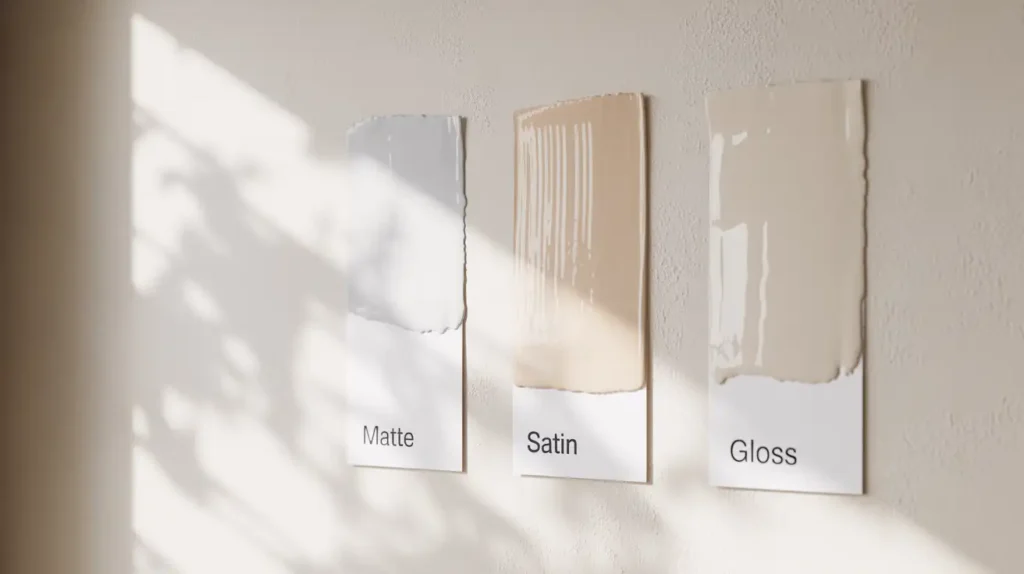
Matte, satin, and gloss differ primarily in shine level, but that single variable creates a ripple effect across durability, cleanability, and how forgiving each finish is toward an imperfect wall surface.
Matte/Flat Finish
Matte, often labeled flat on the can, has virtually no reflective quality. It creates a soft, velvet-like appearance that many designers lean on for formal rooms where they don’t want the wall competing with furniture or artwork.
The strongest advantage of matte is how well it conceals surface flaws such as drywall seams, minor dents, and uneven texture, which makes it a favorite in older homes. The tradeoff is cleanability. Scrubbing a matte wall too hard tends to burnish the paint, leaving a visible sheen patch that never quite blends back in.
This finish performs best on ceilings, formal living rooms, adult bedrooms, and any wall that rarely gets touched or bumped.
Satin and Eggshell Finish
Satin carries a gentle, low-key glow rather than a flat appearance or an obvious shine. Eggshell sits just below satin on the sheen scale, and the two terms are frequently used interchangeably depending on the paint manufacturer.
This middle-ground finish tends to be the most requested option for general living spaces because it holds up to daily contact and light cleaning without drawing attention to every wall flaw the way a glossier finish would. It’s the finish we recommend most often when a client asks for one option that just works across most of the house.
Satin fits naturally in living rooms, hallways, family rooms, and kids’ bedrooms, spaces that see regular activity but still need a warm, livable look.
Semi-Gloss and Gloss Finish
Semi-gloss and full gloss sit at the top of the shine range, producing a hard, reflective surface once fully cured.
Durability is the clear strength here. These finishes shrug off moisture, grease, and scuffing far better than matte or satin, which explains why they’re the standard for kitchens, bathrooms, doors, and trim work. The catch is that this same reflective quality exposes every wall imperfection, from patched nail holes to uneven drywall tape lines, since light bounces directly off any inconsistency in the surface.
Gloss and semi-gloss are the right call for cabinetry, baseboards, window trim, and any room dealing with regular moisture exposure.
Comparison Table
| Feature | Matte/Flat | Satin/Eggshell | Semi-Gloss/Gloss |
| Durability | Low | Medium to High | High |
| Cleaning Ease | Difficult | Moderate | Easy |
| Shine Level | None | Low to Medium | High |
| Best Rooms | Ceilings, formal rooms, bedrooms | Living rooms, hallways, kids’ rooms | Kitchens, bathrooms, trim, doors |
| Cost | Standard | Standard to slightly higher | Slightly higher |
| Hides Wall Flaws | Excellent | Good | Poor |
Tips for Selecting Paint Finishes

Once you break the satin vs gloss vs matte decision down room by room, it stops feeling overwhelming and starts feeling like common sense.
Room-by-Room Guide
Bedroom: Matte or satin, since these are lower-traffic spaces where a softer look is often preferred over shine.
Living Room: Satin is the go-to choice, offering durability without the glare of a fully glossy wall under lamp or overhead lighting.
Kitchen: Semi-gloss or gloss, built to handle grease splatter, steam, and frequent wipe-downs near the stove and sink.
Bathroom: Semi-gloss or gloss, for the same moisture resistance that makes it ideal in kitchens.
Kids’ Room: Satin, since it tolerates crayon marks, handprints, and general wear better than matte while still keeping a soft appearance.
Exterior Walls: A low-sheen or satin exterior formula, which resists weather and fading without creating glare in direct sun.
How Colors Change with Finish
This is something that surprises almost every client the first time they see it in person. The exact same paint color can look like two entirely different shades depending on whether it’s applied in matte or gloss. A deep forest green in matte reads soft and muted, almost like fabric. That same green in gloss looks sharper, cooler, and noticeably more saturated because of how directly it reflects light.
Because of this, it’s worth testing your chosen color in the actual finish you plan to use rather than relying on a flat paper swatch, since paper doesn’t replicate sheen behavior at all.
Factors to Consider Before Choosing
A handful of practical details should guide the final decision. Wall condition matters first, since textured or older walls hide flaws better under lower sheen. Traffic level comes next, as hallways and entryways need tougher, more washable finishes than a guest room that’s rarely used. Humidity pushes bathrooms and kitchens toward semi-gloss or gloss almost automatically. Lighting direction also plays a role, since a room that gets strong afternoon sun can make glossy walls feel overly bright or reflective. And finally, be honest about your own cleaning habits, because a higher sheen will forgive a lot more day-to-day contact than a flat finish will.
Maintenance and Cleaning
Matte surfaces should be dusted or wiped with a barely damp cloth, since heavy scrubbing risks leaving a shiny burnished patch behind. Satin and eggshell tolerate a mild soap and water wipe-down for most everyday marks without much fuss. Semi-gloss and gloss are the easiest to maintain by far, standing up to regular cleaning, disinfectant wipes, and even occasional light scrubbing, which is exactly why they dominate kitchens and bathrooms.
What Happens if I Choose the Wrong Finish?
This is where good intentions often go sideways. Choosing a high-gloss finish for a wall covered in old patch jobs or visible seams means every one of those flaws becomes impossible to miss once the light hits it. On the other hand, using flat matte in a busy hallway or entryway usually leads to permanent scuffs and smudges within a matter of months, since the surface simply can’t handle repeated contact from bags, shoes, and furniture.
We’ve walked into more than a few homes where a hallway painted in flat matte had to be redone entirely because shoe scuffs and fingerprints had built up to the point where cleaning wasn’t an option anymore. That kind of repaint is completely avoidable with the right finish chosen from the start.
Common Mistakes to Avoid
One of the most common mistakes is using a single finish across the entire house without factoring in how each room actually gets used. Another frequent issue is choosing a finish based purely on how it looks under showroom lighting rather than how it will behave in your home’s actual light conditions throughout the day. Ignoring moisture levels in kitchens and bathrooms is a third repeat offender, often leading to bubbling or peeling paint well before it should need a refresh.
Expert Recommendation
Getting the finish decision right the first time saves both money and frustration down the line, which is exactly why a professional opinion carries real weight here. An experienced painter can assess your wall condition, room lighting, and daily traffic patterns, then recommend a finish based on what’s actually worked in similar homes rather than a generic chart.
If a full interior repaint or even a handful of key rooms is on your list, working with a team that regularly handles painting services in San Diego means the finish recommendations come from real project history, not guesswork. Before committing, it’s worth asking your painter directly about wall prep steps, humidity levels in specific rooms, and how much daily wear each space typically sees.
Conclusion
The satin vs gloss vs matte decision ultimately comes down to matching the finish to how each room actually functions day to day, not just picking whatever looks best on a paint chip at the store. Matte suits low-traffic, formal spaces, satin handles the everyday demands of living rooms and hallways, and gloss earns its place in kitchens, bathrooms, and trim where durability and easy cleaning matter most.
If you’re still weighing your options or would rather hand the prep and application over to a professional crew, San Diego home remodeling is ready to help you get it right on the first try. Contact us today to talk through your project and get a finish recommendation built around your actual walls, lighting, and lifestyle.
FAQs
What’s the difference between satin and gloss?
Satin carries a soft, subtle shine suited for everyday living spaces, while gloss has a much stronger reflective finish built for durability. Gloss holds up better in high-moisture or high-traffic zones like kitchens and bathroom trim, while satin fits general rooms like living rooms and bedrooms.
Can matte paint be washed?
Matte paint can be wiped gently with a soft, barely damp cloth, but aggressive scrubbing risks leaving a shiny burnished mark behind. It’s best used in lower-traffic rooms that don’t require frequent heavy cleaning.
What’s the best finish for a kitchen?
Semi-gloss or full gloss works best in a kitchen since it resists grease, steam, and food splatter while allowing for easy wipe-downs. This finish also holds up well near sinks and stovetops where moisture exposure happens constantly.
Can I mix satin and matte finishes in the same room?
Yes, it’s common to use matte on ceilings and satin on walls within the same space for both practical and visual reasons. This pairing reduces overhead glare from lighting fixtures while keeping the walls durable enough for regular contact.
What’s the best finish for exterior walls?
A satin or low-sheen exterior-rated paint is typically recommended since it resists fading and weather exposure without creating excess glare in direct sunlight. Full gloss is usually reserved for trim, shutters, and doors rather than large exterior wall surfaces.