You are in your kitchen with a tape measure, trying to decide if an island or a peninsula would work better in your area. It’s one of the most common choices people have to make when they remodel their kitchens, and making the wrong one may cost you a lot of money and time. The kitchen peninsula vs island debate isn’t just about aesthetics. It’s about how you cook, move, entertain, and live every single day.
Here’s the quick answer: if your kitchen has enough open floor space with at least 42 to 48 inches of clearance on all sides, a kitchen island gives you more flexibility and social space. If your kitchen is small or already has an L- or U-shaped layout, a peninsula is a better and cheaper option. Let’s look at both choices so you can choose with confidence.
Key Takeaways
- Islands need at least 42 to 48 inches of clearance on all sides
- Peninsulas cost $2,000 to $5,000 installed; islands run $3,000 to $8,000+
- Peninsulas work best in smaller kitchens and L-shaped or U-shaped layouts
- Islands boost resale value more in open-concept, larger homes
- You can have both if your square footage supports it
What is a Kitchen Island?
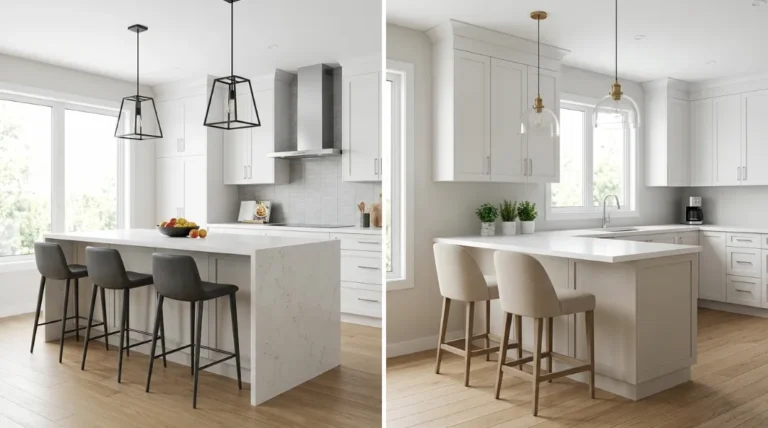
A kitchen island is a freestanding countertop structure sitting in the center of your kitchen, open on all four sides. It acts as a multi-functional workspace for food prep, dining, and socializing all at once.
Islands work best in open-concept homes where the kitchen connects to the living or dining room. They create a natural gathering spot while keeping traffic flow open around the entire structure.
Most modern kitchen islands have storage space underneath, with drawers and cupboards for pots and pans, cutting boards, and small appliances. To provide a full second workspace, many homeowners additionally include a sink, cooktop, or dishwasher right into the island.
Popular island features include:
- Pendant lighting above the countertop for task lighting and visual appeal
- Waterfall edge countertops in quartz or marble for a high-end look
- Built-in seating with barstools on one or two sides
- Extra outlets for small appliances
According to the National Kitchen and Bath Association (NKBA), islands are included in over 63% of kitchen remodels. This builds credibility and supports the claim that islands are a top trend.
What is a Peninsula Kitchen?
A kitchen peninsula is a counter that is attached to a wall or existing kitchen cabinets on one side. It sticks out into the room, making the workspace accessible from three sides instead of four.
Think of it like an island that hasn’t broken free from the wall. It gives you most of the same benefits but fits into tighter spaces where a freestanding island simply won’t work.
Peninsulas naturally form U-shaped or G-shaped kitchen layouts, which are great for keeping everything within arm’s reach during cooking. The connected design also means fewer structural changes, lower installation costs, and less disruption to your existing kitchen cabinets and plumbing setup.
Common peninsula uses include:
- Breakfast bar for casual dining and morning coffee
- Homework or work-from-home counter for families
- Food prep extension away from the main cooking zone
- Room divider between the kitchen and living space
What is the Difference Between an Island and a Peninsula?
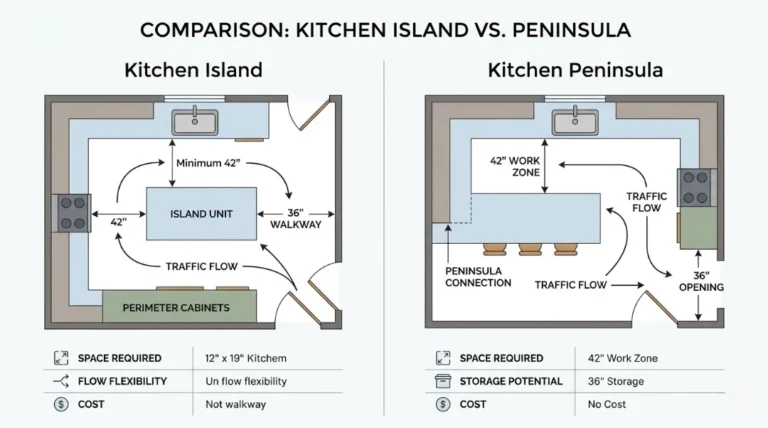
The core difference comes down to one thing: connection. An island stands alone. A peninsula connects to a wall or existing cabinetry on one end.
That single difference affects everything else: traffic flow, installation cost, design flexibility, and how many people can comfortably use the space at the same time.
Feature | Kitchen Island | Kitchen Peninsula |
Access | All 4 sides | 3 sides only |
Space needed | Large kitchen | Small to medium kitchen |
Average cost | $3,000 to $8,000+ | $2,000 to $5,000 |
Installation time | 3 to 5 days | 1 to 3 days |
Layout fit | Open-concept, large kitchens | L-shaped, U-shaped, smaller kitchens |
Social interaction | High | Moderate |
Resale value impact | Strong | Good |
A minor kitchen remodel averages around $27,000 with a recoup rate near 96% in many U.S. markets, which validates the investment argument for both options.
Kitchen Island or Peninsula: Which One is Right For Your Kitchen?
The right choice depends on three things: your kitchen’s square footage, your layout, and how you actually use the space. Islands suit larger, open kitchens where traffic flow and social interaction matter most. Peninsulas suit smaller kitchens where space efficiency and budget are the priority. Neither is universally better.
1. Square Footage and Clearance
This is the first filter. If your kitchen can’t support 42 to 48 inches of walkable clearance on all four sides of an island, don’t force it. A cramped island kills workflow faster than no island at all.
Peninsulas don’t demand as much open floor space. Because one end connects to the wall or existing cabinetry, they take up less room while still adding counter space and seating. In a small kitchen under 150 square feet, a peninsula is almost always the right call.
2. Kitchen Layout Type
Your existing kitchen layout tells you a lot.
- L-shaped kitchen: A peninsula fits naturally at the open end, completing a U-shape without major reconstruction.
- U-shaped kitchen: An island can work in the center if there’s enough room, but it often feels tight.
- Open-concept kitchen: An island shines here. It defines the cooking zone while keeping sightlines open to the living and dining areas.
- Galley kitchen: Neither works well unless one wall is removed, but a small peninsula-style breakfast bar can sometimes fit.
3. The Work Triangle
The work triangle is a mental triangle that connects your sink, cooktop, and refrigerator. The overall length of the legs should be between 4 and 9 feet, and the total length of the legs should not be more than 26 feet.
If an island or peninsula cuts through the work triangle by more than one foot, it will make it harder for you to cook. Before making a decision, draw out your work triangle on paper to see what works without breaking the pattern.
4. Budget Reality
Peninsulas are the budget-friendly option. Since they connect to existing kitchen cabinets and rarely need new plumbing or electrical work, installation runs between $2,000 and $5,000.
Islands cost more because all four sides need a finished look, and many include a sink, cooktop, or dishwasher, each requiring additional plumbing and electrical lines. Budget $3,000 to $8,000 for a standard island, and more if you’re adding appliances.
5. Resale Value
Both options increase resale appeal, but islands tend to impress buyers more in larger homes. In competitive real estate markets, a well-executed kitchen remodel regularly returns close to or over 100% on investment.
Zillow’s Consumer Housing Trends Report or NKBA data showing that kitchen renovations rank among the top three home improvements that attract buyers.
Can You Have a Peninsula and an Island in the Kitchen?

Yes, you can have both a peninsula and an island in the same kitchen, but only if your square footage supports it. As a general rule, your kitchen should be at least 200 to 250 square feet with enough clearance around each structure for comfortable movement. When done right, the combination creates distinct cooking, prep, and social zones.
Your peninsula does all the cooking and cleaning for a dinner party, while the island is where everyone eats and has fun. The island is where students do their homework, while you cook on the peninsula for families. It’s a useful design for big, open-plan kitchens that need clear areas without barriers.
If you’re based in Southern California and thinking about this kind of layout, San Diego Home Remodeling specializes in custom kitchen layouts built around how real families live. Whether you want a seamless island-only design or a peninsula-plus-island combination, our team handles the planning, cabinetry, and execution from start to finish. Learn more about our kitchen remodeling services in San Diego to see what’s possible in your space.
Conclusion
Deciding between a kitchen peninsula vs island isn’t about which one is “better” in general. It’s about which one fits your home. An island is the ultimate social centerpiece for large rooms. A peninsula is the efficiency expert for tight spaces.
First, measure your walkways. Don’t try to make an island if you don’t have 42 inches of space. A well-planned peninsula will be far better for you than a little island. Pay attention to how you move, where you eat, and how much money you have. Once you have those three answers, it will be evident what to do.
FAQs About Kitchen Peninsula vs Island
Is a peninsula cheaper than a kitchen island?
Yes. Peninsulas typically cost $2,000 to $5,000 installed, while kitchen islands run $3,000 to $8,000 or more depending on size, materials, and whether plumbing or electrical work is needed.
What size kitchen do you need for an island?
Your kitchen should have at least 42 to 48 inches of clearance on all four sides of the island. In practical terms, most kitchens need to be at least 150 to 200 square feet to comfortably accommodate a standard island.
Can you convert a peninsula to an island?
Yes, but it requires removing the connection to the wall or existing cabinetry, finishing all four sides, and potentially rerouting plumbing or electrical lines. It’s a more involved project but completely doable during a full kitchen remodel.
Which adds more value to a home: island or peninsula?
Islands typically add more perceived value in larger, open-concept homes where buyers can appreciate the layout. Peninsulas add strong functional value in smaller homes and are often better suited to mid-range remodels.
Does a peninsula block natural light?
It can, especially if it’s positioned against or near a window. During the planning phase, check how your peninsula placement affects natural light flow before finalizing the design.