A small kitchen feels frustrating. Counters fill up fast, the space feels heavy, and cooking becomes a chore instead of something you enjoy. If you live in a condo, apartment, or older home with a compact kitchen, you already know this feeling well.
How to make a small kitchen look bigger: Use light colors, clear sightlines, reflective surfaces, and smart vertical storage. Most of these changes cost under $500 and don’t require tearing anything down. This guide gives you 12 practical design tricks, common mistakes that are making your kitchen worse right now, and honest advice on when to call a professional.
12 Ways to Make a Small Kitchen Look Bigger
1. Use Light, Warm Colors on Every Surface
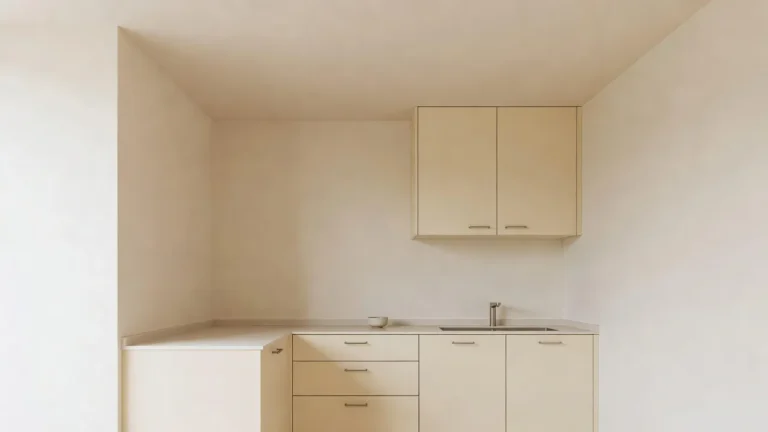
Color is the fastest and most affordable fix. Light colors reflect more light, which visually pushes walls back.
The best colors for small kitchens are warm whites, soft creams, pale sage, and light warm grays. These shades create visual continuity across every surface. Paint the walls, cabinets, and ceiling the same tone. When there is no contrast between surfaces, your eye moves through the space without stopping. That alone creates the illusion of a bigger kitchen.
One detail most small kitchen decorating guides skip: paint your ceiling the same color as your walls, or one shade lighter. A contrasting ceiling visually divides the room and makes it feel shorter.
2. Create Visual Continuity With a Countersplash
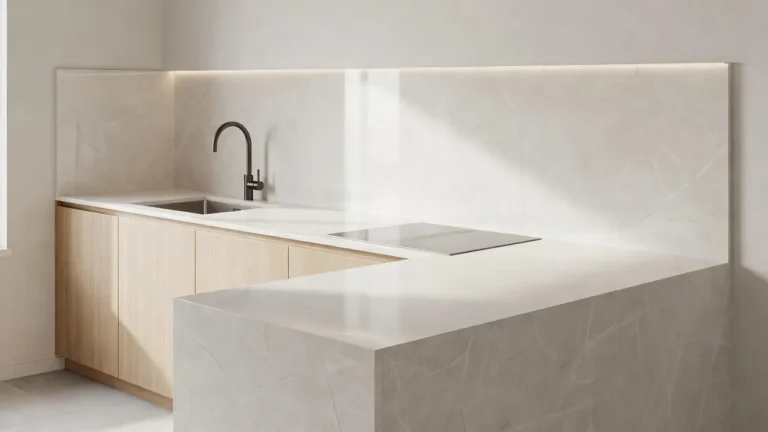
The countersplash is one of the smartest decorating tips for small kitchens right now. It means using the same material on both your countertop and backsplash.
When the counter and the wall behind it form a single continuous surface, the eye doesn’t stop. There is no visual break, no contrast, no boundary. That seamless finish makes the whole kitchen read as calmer and larger.
Light quartz with a closely coordinated tile backsplash works well. If a full-slab backsplash is beyond your budget, pick a tile that closely matches your countertop color to achieve a similar effect.
3. Take Cabinets All the Way to the Ceiling
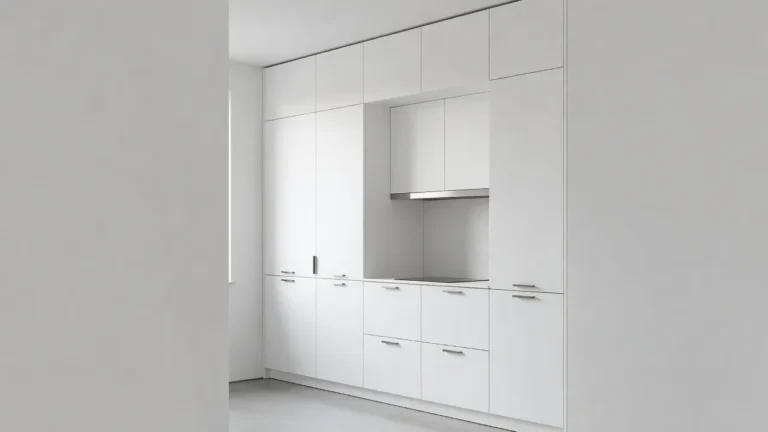
Most kitchen cabinetry stops 12 to 18 inches below the ceiling. That gap collects dust and visually chops the room height.
Ceiling-height cabinets solve two problems at once. You gain storage for items you rarely use, and the vertical lines draw the eye upward. That makes the room feel taller without changing the floor plan at all.
If full cabinet replacement is not in the budget, add a filler shelf or panel above existing cabinets to close the gap. It is a low-cost update with a high visual payoff.
4. Build a Layered Lighting Scheme
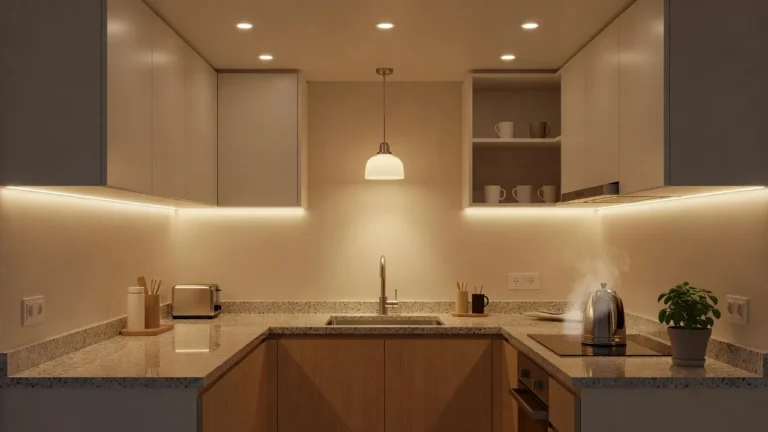
Kitchen lighting for small spaces cannot rely on a single overhead fixture. One ceiling light casts shadows in corners and makes the room feel heavier than it is.
Layered lighting fixes this. Start with recessed lighting in a grid pattern across the ceiling. Add under-cabinet lighting to wash the countertop in an even glow. A small pendant light over the sink or island adds warmth and draws the eye upward.
Task lighting and ambient lighting working together eliminate dark zones. A well-lit kitchen always feels larger than a dim one of the same size.
5. Introduce Reflective Surfaces
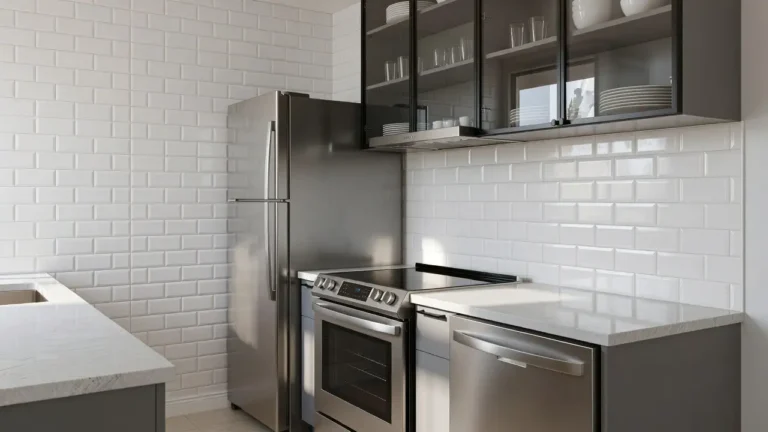
Reflective surfaces bounce light around the room, creating visual depth. In any tiny kitchen design, this matters more than most people realize.
Consider glass-front cabinets, glossy subway tiles, lacquered paint on cabinet fronts, stainless steel appliances, or a mirrored backsplash behind the stove. Each surface multiplies the light already in the room.
A mirrored backsplash is especially effective in a galley kitchen. It reflects the room at you and genuinely doubles the visual depth of the space.
6. Integrate Your Appliances
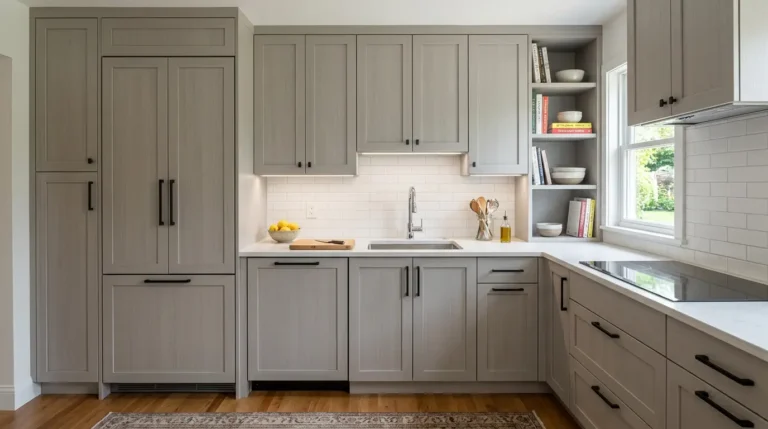
Freestanding appliances break the visual flow of a kitchen. A standard refrigerator, a mismatched dishwasher, and a toaster sitting on the counter each add visual weight.
The integrated appliances trend addresses this directly. A panel-ready dishwasher and a built-in refrigerator hidden behind cabinet panels create a seamless finish across the entire wall. The eye moves uninterrupted from one side of the kitchen to the other. That visual continuity is one of the strongest ways to open up a small kitchen without changing the layout.
7. Use Open Shelving in the Right Spots
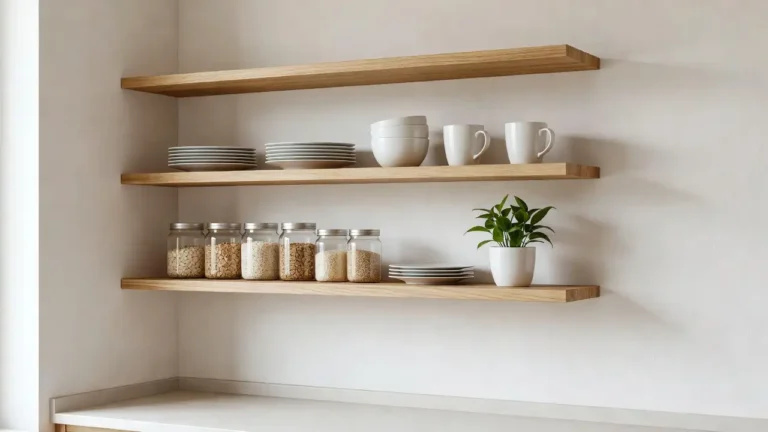
Does open shelving make a kitchen look bigger? Yes, but only when used selectively.
Replacing one or two upper cabinet sections with open shelves removes the visual weight of solid cabinet doors. It creates a sense of depth and airiness. But if every wall becomes open shelving, the opposite happens. Clutter takes over, and the space feels chaotic.
Use it on one wall as an accent. Keep only what looks clean on display: dishware, glass jars, and a small plant. Store everything else behind closed doors.
8. Use a Rolling Cart Instead of a Fixed Island
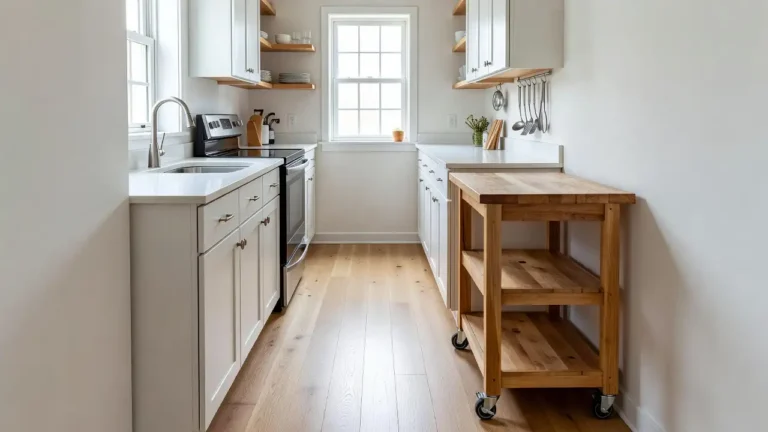
Should you add an island to a small kitchen? That depends on your floor space.
In kitchens under 150 square feet, a fixed kitchen island blocks movement and creates a bottleneck. A rolling cart solves this cleanly. Pull it out for prep work, push it against the wall when you are done. You get the function of an island without sacrificing flow.
In a galley kitchen layout, a narrow rolling cart with a butcher block top adds prep space and storage without closing off the aisle.
9. Clear the Countertops
Nothing shrinks a kitchen faster than a cluttered kitchen worktop. Visual clutter adds weight to the space and breaks up sightlines.
Move the toaster, coffee maker, and blender off the counter. Store them in an appliance garage, a dedicated cabinet section where small appliances stay plugged in but out of sight. Every inch of clear counter space adds to the feeling of a larger, more functional kitchen.
This is one of the most effective tips to maximize a small kitchen without spending a single dollar.
10. Choose the Right Kitchen Flooring
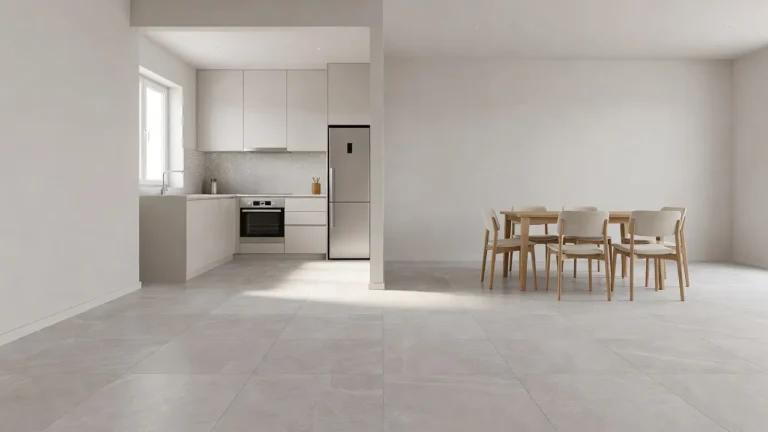
Flooring ideas for small kitchens come down to two rules: keep it light and keep it continuous.
Light-colored floors reflect light upward and brighten the room. Large-format tiles with minimal grout lines reduce visual breaks, making the floor look more open.
Run the same flooring from the kitchen into adjacent rooms. When the floor is continuous, the eye perceives one large space rather than two small separate rooms. This is a powerful trick to make a kitchen look larger, and it works in both rentals and owned homes.
11. Draw the Eye Upward
Vertical lines make ceilings feel higher, and rooms feel taller. This matters a lot in compact kitchen design.
Tall, narrow cabinet doors, vertical tile patterns, a statement pendant light, or a piece of art hung high on the wall all guide the eye upward. This creates a focal point that draws attention away from limited floor space. Per kitchen trends 2026, the cabinet cutout trend also adds this vertical interest while keeping a clean, modern look.
12. Switch to Handleless Cabinets
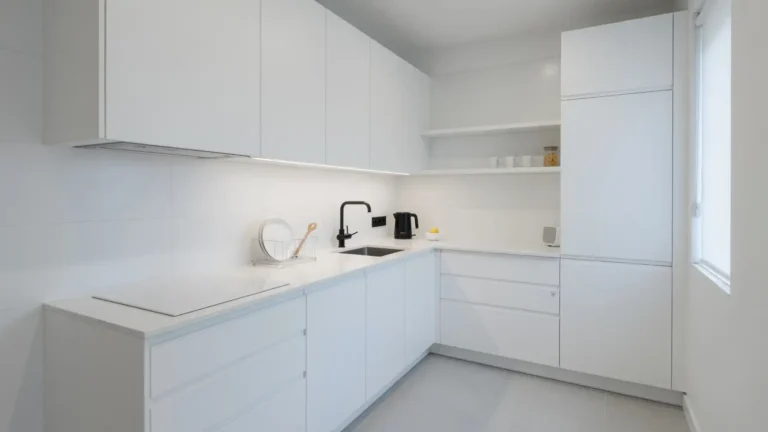
Cabinet handles seem like a small detail. In a tight space, they add visual noise across every surface.
Handleless kitchen cabinets using push-to-open catches or integrated edge pulls remove that clutter. Clean lines across every cabinet face make the kitchen look sleeker and more open. This is also one of the most cost-effective updates in a small kitchen, both before and after a remodel.
Common Mistakes That Make Small Kitchens Look Smaller
These mistakes cancel out everything above. Stop doing them first.
- Too many contrasting colors. Different tones on walls, cabinets, and ceilings create hard visual stops. The room feels divided into sections rather than a single cohesive space.
- Oversized appliances. A full-size fridge in a 100-square-foot kitchen takes up more visual and physical space than any other element. A slimline fridge or compact dishwasher frees up room, changing the whole layout.
- Blocking the sightlines. If something blocks the view from one end of the kitchen to the other, the space feels closed off. Unobstructed sightlines are the foundation of any small kitchen design.
- Heavy window treatments. Thick curtains block natural light. A bare window or a simple linen shade keeps light moving freely through the room.
- Ignoring the elevation of a kitchen. Most people decorate at eye level and below. Adding vertical details above the cabinets, lighting, artwork, and open display changes how the whole room feels.
Ready to Remodel Your Small Kitchen in San Diego?
DIY fixes work well for painting, lighting swaps, hardware changes, and open shelving when the layout needs to change, moving plumbing, repositioning cabinets, or opening a wall. That’s when professional work delivers lasting results and protects your home’s value.
San Diego Home Remodeling provides full kitchen remodeling services for homeowners throughout San Diego. The team works with compact kitchens every week and knows which structural and design changes deliver the biggest return in small spaces.
Request a free in-home consultation today. Get an honest walkthrough of what your kitchen needs, what it will cost, and what is possible in your specific space. No pressure, no guesswork.
Frequently Asked Questions
What is the easiest way to make a small kitchen look bigger?
Paint the walls, cabinets, and ceiling the same light, warm tone. Visual continuity between all surfaces is the fastest change you can make and requires no structural work.
What color makes a kitchen look bigger?
Warm whites, soft creams, and light warm grays work best. These shades reflect light rather than absorb it, which makes walls feel farther apart.
Does open shelving make a kitchen look bigger?
Yes, when used selectively. Replace one or two upper cabinet sections with open shelves to reduce visual weight. Using open shelving on every wall creates clutter, making the space feel smaller.
Should I add an island to a small kitchen?
Only if your kitchen is larger than 150 square feet and allows at least 42 inches of clearance on all sides. For tighter spaces, a rolling cart gives the same prep and storage function without blocking movement.
How do you make a galley kitchen feel bigger?
Keep the aisle at least 42 inches wide, use the same cabinet color on both sides, add under-cabinet lighting, and install a mirrored backsplash on one wall to visually double the space’s depth.
Can I make my kitchen look bigger without a full renovation?
Yes. Painting, decluttering countertops, swapping cabinet hardware, and adding layered lighting are all changes that cost well under $500 and significantly shift how the kitchen feels.