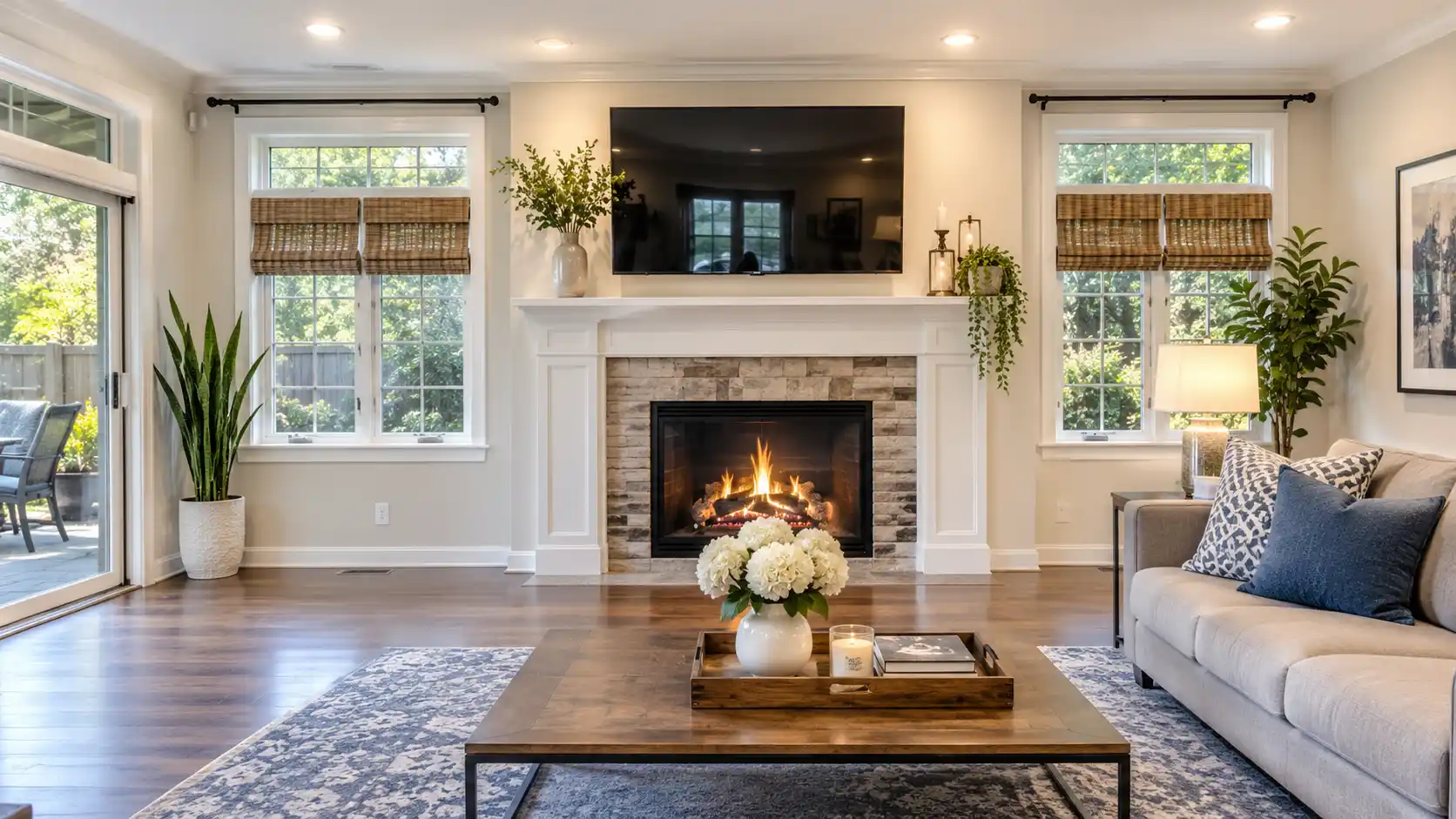

Picture two homeowners with the same budget and the same urge to start fresh. One walks into a kitchen. The other walks into a bedroom. A week later, only one of them is still deciding on drain locations, circuit counts, vent ducting, and cabinet layouts. That gap is exactly why people keep asking which room in a house is most expensive.
Quick answer: The kitchen is usually the costliest room, because it packs several trades, heavy materials, and big-ticket appliances into a single space. Primary bathrooms normally come second. Basements and room additions can jump ahead of both when you’re building brand new square footage instead of updating what’s already there.
That’s the short version. The longer version depends on how you measure cost, how old your house is, and how far you plan to go. San Diego Home Remodeling wrote this guide so you can see where the money really goes, room by room, before you commit to a plan.
The Short Answer: Kitchen Usually Wins
If you’re hunting for the most expensive room to remodel, start with the kitchen. In a typical home, it carries the highest total price, and not because it’s the biggest room. It wins because so much has to happen inside it at the same time.
Here’s a simple way to compare rooms. These are relative levels, not quotes, since scope and finishes can move any number a long way.
| Room | Typical cost level | Main cost driver |
| Kitchen | Highest total | Cabinets, counters, appliances, several trades |
| Primary bathroom | High, often highest per square foot | Waterproofing, tile, fixtures, plumbing |
| Basement or room addition | Varies widely, can top the kitchen | Foundation, structure, permits, new systems |
| Garage conversion | Moderate to high | Insulation, electrical, climate control, permits |
| Living room | Lower | Flooring, paint, lighting |
| Bedroom | Lowest | Mostly finishes |
The table can’t show how much one decision can swing a room. A kitchen with stock cabinets and the same layout sits in a completely different place than one with a relocated sink wall and custom millwork. Treat the ranking as a starting map, not a final bill.
Why Kitchens Cost So Much
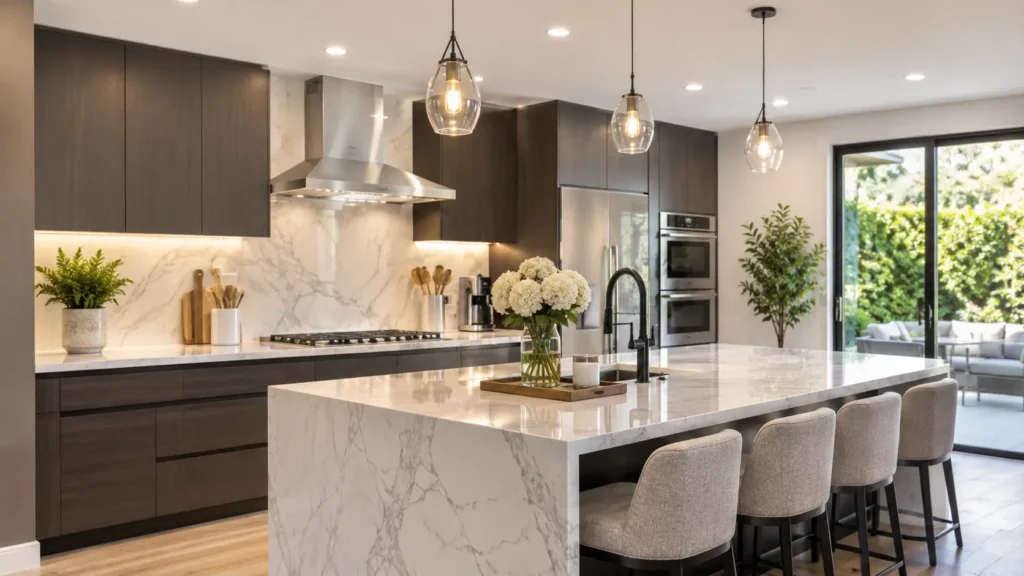
Kitchen budgets rarely get blown by one giant item. They get stretched by the pile-up. At San Diego Home Remodeling, kitchen planning works best when you split the budget into layers instead of staring at one total. Cabinetry is usually the heaviest layer. Countertops and appliances come next, and their prices swing wildly depending on material and brand tier. Then come the systems you never see in a showroom: a range hood that has to vent outside, dedicated electrical circuits for appliances, water lines for the sink, dishwasher, and fridge, and lighting that meets current code.
Labor is the layer people underestimate. A kitchen needs a plumber, an electrician, a cabinet installer, a countertop fabricator, a tile setter, and a painter, and each one waits on the last. Countertops can’t be measured until the cabinets are set, and fabrication takes time after that. If one step slips, the whole schedule slides. If you’re weighing layouts and materials, our San Diego Kitchen Remodeling Services page explains how that planning usually unfolds.
Bathrooms Cost More Than Their Size Suggests

A bathroom is small, but almost every square inch is working hard. Waterproofing has to be done perfectly, because a mistake behind the tile won’t show up until water has been quietly doing damage for months. Tile needs a skilled setter, and small rooms with lots of cuts and corners take longer than you’d expect. Then there are fixtures. A shower valve, a vanity, a toilet, a fan, lighting, and glass add up quickly. A primary bath makes it pricier with double sinks, a freestanding tub, or a curbless shower that needs the floor recessed so the water slopes properly.
Here’s a quick example. Moving a toilet just a few feet sounds minor. But the drain has to travel with it, which can mean opening the floor and reworking framing or even cutting into a slab. That one small move can change the price of the whole job. If a bathroom is on your list, take a look at our Bathroom Remodeling in San Diego page to see what a well-planned project involves.
Cost Per Square Foot vs Total Cost
This is where most articles stop short. Which room is most expensive to renovate depends entirely on your measuring stick. By total cost, the kitchen usually leads. By cost per square foot, a bathroom often matches it or beats it. A bathroom might be a fraction of the size of a kitchen while still needing a toilet, a vanity, a shower, waterproofing, and tile. You’re paying for a lot of work spread across very few square feet.
So when someone asks which room in a house is most expensive, the honest reply is another question: expensive in total, or per square foot? A practical tip: only compare per square foot between rooms of the same kind. It’s useful for judging one bathroom quote against another. It’s close to meaningless for a bedroom, where there’s so little work to divide.
Rooms People Forget: Basements, Additions and Outdoor Spaces
When you add or convert space instead of refreshing it, you start paying for structure, not just finishes. That’s why these are some of the most expensive rooms to renovate once everything is counted.
Basement and Garage Conversions
Basements bring moisture control, ceiling height limits, and egress requirements if the space will be used for sleeping. Adding a bathroom below grade can mean breaking through the concrete floor to run new drain lines.
Garage conversions have their own surprises. Slabs often slope toward the door and aren’t insulated; the old door opening has to become a real wall, and the space needs heating, cooling, and proper electrical. San Diego has specific rules around garage conversions, so confirm requirements with the city before you design anything.
Room Additions and Outdoor Kitchens
An addition means a new foundation, framing, roof tie-in, exterior matching, and often more heating and cooling capacity. Your electrical panel may also need an upgrade to handle the extra load. Plan review and permits add time before work even starts.
Outdoor kitchens look simple but behave like indoor ones. They need gas, water, drainage, and power, plus materials that can handle sun and coastal air, and often a structure overhead.
The Cheaper Rooms to Update
Bedrooms and living rooms sit at the friendly end of the scale. The work is mostly flooring, paint, lighting, trim, closets, and built-ins. Few trades are involved, plumbing is rare, and nothing needs to be opened up behind the walls.
That’s why a bedroom almost never competes for the title of most expensive room in a house. There’s one edge case worth knowing. If a bedroom update turns into a new primary suite with an attached bathroom or a bump-out, you’re no longer pricing a bedroom. You’re pricing a bathroom and an addition wearing a bedroom’s name.
What Makes a Room Expensive in San Diego
The room matters, but so does where it is and what it’s attached to. Local labor rates and permit requirements shape every project. California’s energy code adds requirements for lighting and other systems that can change what a simple update costs. Coastal air is hard on exterior fixtures, hardware, and some metals, so durable materials often cost more up front. Hillside lots can limit access, which means materials get carried by hand, and crews lose time.
Older homes add another layer. Panels that were sized for fewer appliances, aging plumbing, and finishes from before the late 1970s may need testing for lead paint or asbestos before anyone touches them. Safe handling costs money, but skipping it costs far more. So when you ask which room is most expensive to renovate in San Diego, the age and condition of your house matter nearly as much as the room itself.
Hidden Costs Most Homeowners Miss
Surprises rarely come from the finish line. They come from the start. Permits and design fees are easy to forget when you’re only pricing cabinets and tile. Demolition can uncover rot behind a shower wall or old wiring that needs replacing. An electrical panel upgrade can appear on the list suddenly when new appliances push the load too high.
Then there’s life during construction. A kitchen project can mean weeks of takeout, a temporary setup in the dining room, and storage for furniture. Backordered materials can stretch the schedule, and a longer schedule means longer disruption. The most expensive rooms to renovate also tend to hide the most surprises, because they hold the most pipes, wires, and waterproofing.
Is the Most Expensive Room Worth It?
Sometimes, yes. Kitchens and bathrooms tend to attract buyers, which is why many homeowners spend more there. But a return is never guaranteed, and it rarely matches what you spend dollar for dollar. It depends on your neighborhood, the quality of the work, and the market when you sell.
The real danger is overbuilding. A top-tier kitchen in a house priced well below that level doesn’t always pay you back. A good rule is to match the finish level to the home and to how long you plan to stay. If you’ll be there ten years, comfort and daily use matter as much as resale. If you might sell in two, restraint usually wins. Even if the most expensive room in a house is the one you’re updating, you’re not obligated to spend at the top of the range.
How to Plan Your Budget Without Overspending
Start with a contingency. Many planners set aside 10 to 20 percent for the unexpected, especially in older homes. Treat it as part of the budget, not a bonus. Decide your priorities before you shop. Spend first on what’s hard to change later, like plumbing, wiring, waterproofing, and layout, and save finish upgrades for where you’ll notice them daily. If the full scope is too much at once, phasing helps, as long as the plan is designed as a whole so early work doesn’t get redone.
Finally, get several quotes and compare them line by line. Check that each one covers the same scope, and look closely at allowances, which can make one bid look cheaper until the real choices are made. Even in the most expensive room to remodel, you control far more than it feels like at the start.
Final Thoughts
So, which room in a house is most expensive? Usually the kitchen, with the primary bathroom close behind and additions or basements sometimes leading when you’re building new space. The details behind those rankings, like layout changes, home age, and local requirements, are what actually set your number.
If you’re planning a project and want a clear picture before you commit, contact us. San Diego Home Remodeling can help you sort priorities, understand the scope, and plan a budget that fits your home.
Frequently Asked Questions
What is the most expensive room to remodel in a house?
The kitchen is usually the most expensive room to remodel because it combines cabinets, counters, appliances, and several trades. Room additions and basement conversions can cost more when you’re creating new space instead of updating existing space.
Is a bathroom or kitchen more expensive per square foot?
Bathrooms are often equal to or higher than kitchens per square foot, since plumbing, tile, and waterproofing are packed into a small area. Kitchens still tend to win on total cost because of their size and number of components.
Which room adds the most value to a home?
Kitchens and bathrooms are the rooms buyers pay the most attention to, so updates there tend to carry strong appeal. The actual return depends on your neighborhood, the quality of the work, and market conditions.
What is the cheapest room to renovate?
Bedrooms and living rooms are usually the cheapest to renovate because the work is mostly cosmetic. Costs rise quickly if you add a bathroom, move walls, or expand the footprint.
How much should I budget for a whole house remodel in San Diego?
There’s no honest single number, because size, age, scope, and finish level change the total dramatically. Get itemized quotes for your specific plan and keep a contingency set aside for surprises.