Most homeowners notice a fading wall or a peeling window frame and wonder how often should you paint your house before it turns into a bigger problem. The short answer: plan on repainting the outside every 5 to 10 years and the main rooms inside every 5 to 7 years. Wood siding, busy kitchens, kids’ rooms, and sun-baked walls usually need attention sooner, while fiber cement and painted brick can go much longer.
There is no single number because paint ages differently on every surface. Sun, moisture, the quality of the last job, and how you live in the space all change the clock. At San Diego Home Remodeling, we see this every week, so this guide covers realistic timelines, warning signs, and ways to stretch the life of a paint job.
The Short Answer: Quick Timeline for Interior and Exterior
Here is a quick reference you can screenshot and keep. These are general ranges, and local conditions can push any of them shorter or longer.
| Area or surface | Typical repaint interval | What shortens it |
| Exterior stucco | 5 to 7 years | Cracks, sun exposure, coastal salt air |
| Wood siding | 3 to 7 years | Moisture, shade with poor airflow, sun on west walls |
| Fiber cement | 10 to 15 years | Failed caulk, poor prep on the first coat |
| Painted brick | 15 to 20 years | Trapped moisture, peeling from old coatings |
| Exterior trim and doors | 3 to 6 years | Direct sun, foot traffic, horizontal surfaces |
| Interior walls (living areas, adult bedrooms) | 5 to 10 years | Smoke, cooking residue, constant sunlight |
| Kitchens | 2 to 4 years | Grease, steam, frequent scrubbing |
| Bathrooms | 2 to 4 years | Humidity, weak ventilation |
| Ceilings | 7 to 10 years | Water stains, nicotine, kitchen steam |
| Kids’ rooms | 2 to 4 years | Marker, fingerprints, constant cleaning |
If your house sits in more than one row, treat each area on its own schedule. You do not need to repaint everything on the same day.
Need vs Necessity: Why Some Repaints Can Wait and Others Cannot
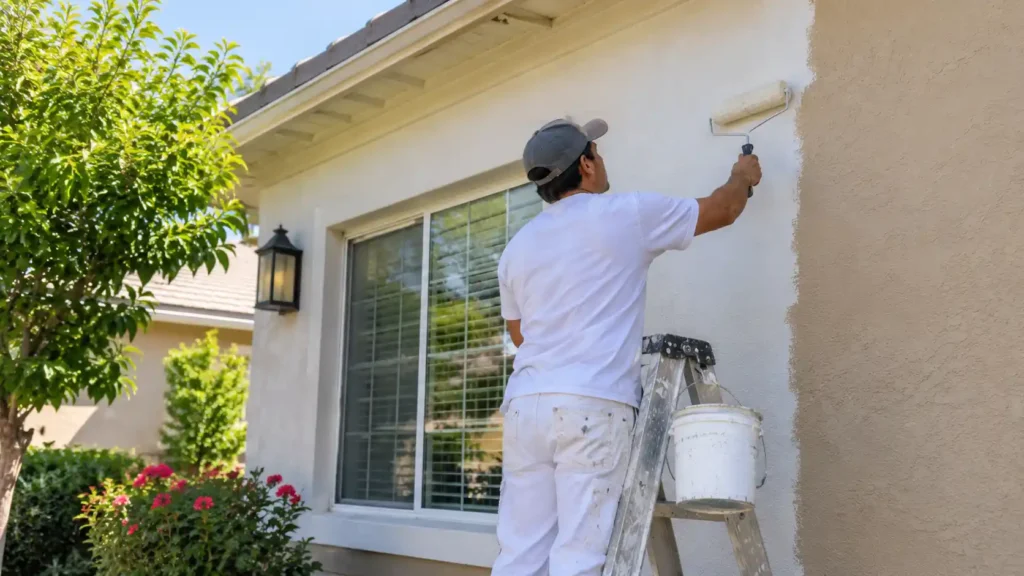
Not every repaint is urgent, and it helps to know which kind you are facing.
A cosmetic repaint is about how the home looks and feels. The color is tired, the walls look dull, or you are simply ready for a change. It can wait for a better season or a better budget.
A protective repaint is about keeping water, sun, and pests out of the structure. Paint on the outside of a house is a thin shield, and once it breaks down, the material underneath starts taking the hit.
A simple rule of thumb: if the surface is only dirty, faded, or boring, it is cosmetic. If the paint is peeling, cracking, chalking heavily, or leaving bare material exposed, it is protective, and it should move to the top of your list.
How Often to Paint the Exterior of Your House
Ask ten people how often should exterior house paint be replaced, and you will hear answers anywhere from 3 to 20 years. That wide range is not confusion. It reflects real differences in siding, climate, paint quality, and how well the last job was prepared. A well-prepped house painted with quality exterior paint can easily outlast a rushed one by several years.
Exterior Timelines by Siding Material
- Stucco: Usually every 5 to 7 years. Stucco is porous, and fresh paint helps seal the tiny hairline cracks that let water in.
- Wood siding: Every 3 to 7 years. Wood expands and contracts with moisture, which stresses the paint film.
- Fiber cement: Every 10 to 15 years. It handles moisture well, but the caulk at joints and corners still needs regular checks.
- Painted brick: Every 15 to 20 years. It lasts long, but once paint starts peeling on brick, moisture is often the real cause and should be solved first.
- Aluminum siding: Every 5 to 10 years, depending on how much the finish has chalked.
Why Trim and Doors Often Need Paint Sooner Than Walls
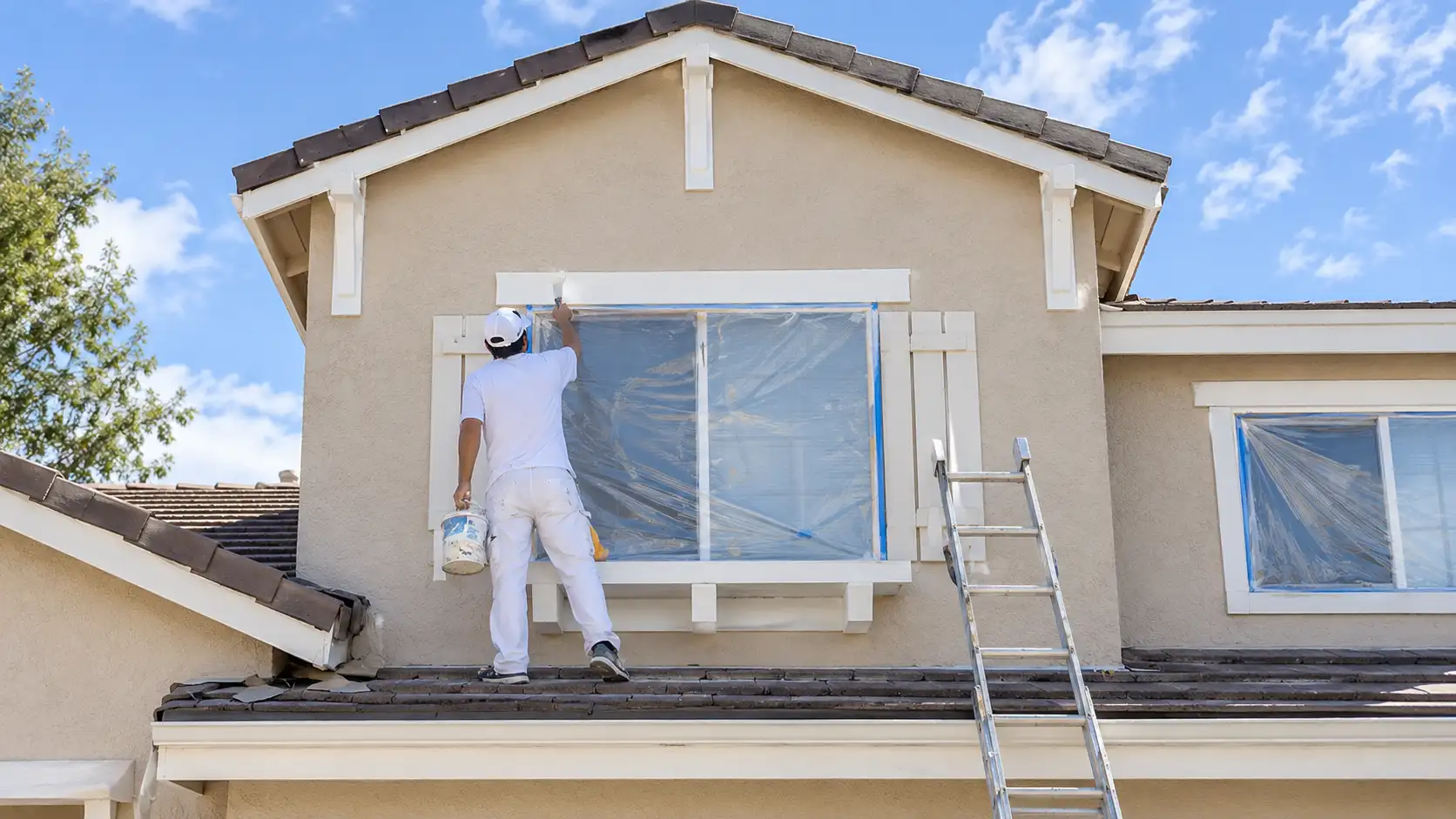
Trim, window frames, and front doors take the harshest beating on the house. They face direct sun, sit on horizontal edges where water lingers, and get touched constantly. It is common to repaint trim and doors a full cycle before the main walls. Painting them early also prevents small gaps from letting water into the framing behind them.
How San Diego’s Climate Affects Your Paint
San Diego is easy on paint compared with places that get snow and ice, but it is not gentle. Strong, year-round sun breaks down pigments and binders, which is why south and west walls often fade first. Coastal neighborhoods add salt air, which can chalk the surface and eat at metal fixtures. Marine layer mornings keep walls damp longer than you might expect, especially on shaded sides of the house. Inland areas swing the other way, with heat that can dry out and crack older coatings. And when the occasional heavy rain arrives, any weak spot in the paint gets tested immediately.
In practice, a coastal stucco home and an inland stucco home of the same age can need repainting on different schedules. San Diego Home Remodeling works with homeowners across these microclimates, so we always look at which side of the house gets the most sun and moisture before suggesting a timeline. As a general guide, coastal and west-facing homes sit closer to the shorter end of the range, while shaded, well-ventilated homes often stretch toward the longer end.
How Often Should Interior Walls Be Painted?
Inside the house, weather is not the problem. Daily life is. So how often should interior walls be painted? For most living rooms, dining rooms, and adult bedrooms, every 5 to 7 years is a comfortable rhythm, and some low-traffic rooms stay fresh closer to 10.
Different rooms wear at different speeds:
- Kitchens: Grease, steam, and frequent wiping dull the finish quickly. Every 2 to 4 years is realistic.
- Bathrooms: Humidity is the enemy. Without a good exhaust fan, paint can start peeling in a couple of years.
- Hallways and entryways: Hands, bags, and furniture rub against these walls all day, so scuffs build up fast.
- Kids’ rooms: Expect a refresh every 2 to 4 years if the walls see a lot of action.
- Ceilings: These last the longest, often 7 to 10 years, unless stains or kitchen steam are in play.
Lifestyle changes the schedule too. Pets, smoking, candles, and heavy cooking all shorten the interval, while a quiet, mostly adult household can stretch it. A washable, higher-sheen finish in busy rooms also buys you extra time.
Signs Your House Needs Repainting Now
You do not need to follow a calendar strictly. Your house will tell you when it is ready.
Outside, look for:
- Peeling, blistering, or bubbling paint
- Cracks in stucco or hairline gaps at siding joints
- Chalky residue that rubs off on your hand
- Heavy fading, especially on sun-facing walls
- Bare patches of wood or plaster
- Mildew or dark streaks that return after cleaning
- Dried, shrunken, or cracked caulk around windows and doors
Inside, look for:
- Scuffs and marks that will not wipe off
- Dull, yellowed, or blotchy walls
- Stains from water or smoke
- Peeling paint in humid rooms like bathrooms
- Hairline cracks in drywall or plaster
Two quick checks you can do in minutes:
- The fingertip chalk test. Rub your hand firmly across a sun-facing wall. If a heavy powder comes off, the paint binder is wearing thin.
- The slow walk-around. Circle the house in good daylight and look closely at trim, corners, and the base of walls. Problems usually start in those spots.
What Really Makes a Paint Job Last Longer
When people ask how long does house paint last, the honest answer is that the paint is only part of the story. These factors matter most:
- Surface prep. Washing, scraping, sanding, and repairing cracks decide whether new paint bonds or fails. Prep is where cheap jobs usually cut corners.
- Quality of paint. Better exterior paints resist fading and flexing, and they hold up longer under San Diego sun.
- The right primer. Bare wood, patched stucco, and stained areas need primer so the topcoat sticks and looks even.
- Weather during application. Painting in the wrong conditions, like damp mornings or extreme heat, can weaken adhesion.
- Enough coats. A thin, single coat on a tired surface rarely lasts.
- Caulking and repairs. Fresh caulk keeps water out at joints, which protects the paint and the framing.
A cheap, rushed job may save money today, but if it peels in three years, you pay for the work twice, and the second time usually includes extra prep to remove the failed layer.
What Happens If You Wait Too Long to Repaint
Waiting a little past the ideal window is usually harmless. Waiting several years past it can get expensive. Once paint fails, water finds its way into wood, stucco, and trim. Wood can swell, soften, and rot. Hairline stucco cracks can widen and let in more moisture. Peeling paint also means the crew has to scrape and repair much more before they can paint, which adds labor and cost.
Picture two similar houses. The first owner repaints on schedule, and the crew washes, spot-primes, and applies two coats. The second owner waits until the trim is peeling in sheets and a few boards are soft. That job now includes carpentry repairs, heavy scraping, and extra primer before any color goes on. Same house, but a very different bill.
Best Time of Year to Paint in San Diego
For exteriors, the best time has less to do with the calendar and more to do with conditions. Aim for mild temperatures, low humidity, and several dry days in a row. Marine layer mornings can leave surfaces damp, so crews often wait until walls are dry before starting. Extremely hot, direct sun can make paint dry too fast and affect the finish, so shading or scheduling around the sun helps.
Interior painting is far more flexible, since you control the environment. Open windows or run fans for ventilation, and give each coat enough time to cure properly before moving furniture back.
Can You Extend the Time Between Repaints? Simple Maintenance Tips
A little upkeep goes a long way toward helping paint last.
- Wash exterior walls once a year with a gentle method to remove dirt, salt, and mildew.
- Touch up small chips and scratches before they spread.
- Check caulk around windows, doors, and trim every year, and replace it when it cracks.
- Keep sprinklers from spraying directly on walls, and trim plants back from the siding.
- Repair hairline cracks quickly before water gets in.
- Run bathroom fans during and after showers to protect interior paint.
Should You Paint It Yourself or Hire a Professional?
Painting a single bedroom is a reasonable weekend project for many people. A full exterior is a different story. Ladders, prep work, lead-safe practices on older homes, and getting an even finish across large surfaces all add up fast. Mistakes in prep often show up as peeling a few years later.
Hiring a pro gives you speed, consistent results, and usually some form of warranty on the work. If you are weighing options, you can learn more about our approach through our San Diego House Painting Services, or compare it with your own time, skill, and tools. Choose what fits your home, comfort level, and budget.
Final Thoughts
The best answer to how often you should repaint is to match the timeline to your home’s material, climate, and daily wear. Check the outside once a year, treat busy interior rooms on a shorter cycle, and do not ignore peeling or cracking, since those are protective problems, not cosmetic ones. If you want a clear opinion on what your house needs right now, contact us at San Diego Home Remodeling, and we will help you plan a repaint that fits your home and your budget.
Frequently Asked Questions
Is it okay to repaint my house every 10 years?
Yes, for many homes that is a reasonable upper limit, especially with quality paint and good prep. Wood siding, trim and sun-facing walls may need attention earlier, so check them yearly rather than waiting for a fixed date.
How often should I paint the interior of my house?
Main rooms usually need paint every 5 to 7 years. Kitchens, bathrooms, hallways, and kids’ rooms often need it every 2 to 4 years because they take more wear.
Does stucco need to be painted as often as wood siding?
Not usually. Stucco often goes 5 to 7 years between coats, while wood siding can need paint every 3 to 7 years. The exact timing depends on cracks, sun exposure, and moisture.
How long does exterior paint last in a sunny climate?
Strong sun speeds up fading and chalking, so paint often lasts toward the shorter end of its normal range, especially on south and west walls. Quality paint and good prep help it hold up longer.
What is the cheapest way to make paint last longer?
Annual washing, quick touch-ups, and keeping caulk in good shape cost very little and prevent bigger repairs. Good surface prep on the original job is the other big money saver.