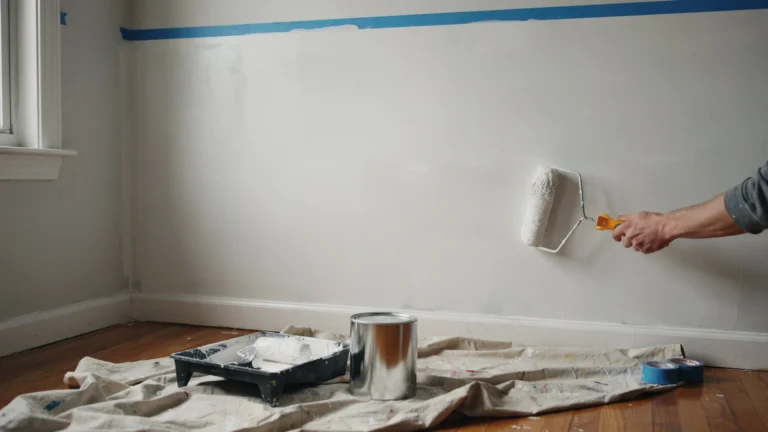
You roll the last stroke, step back, and the wall looks flawless. Then the morning sun hits it and every roller mark and thin patch shows up. That gap between “looks done” and “is done” is why people ask how many coats of paint are needed before they even open the can.
At San Diego Home Remodeling, this is one of the first things we sort out before any paint job starts, because the answer changes with the room, the color, and the surface.
Quick answer
Two coats is the standard for most rooms. One coat works only when you repaint a similar color over a clean, sound wall with quality paint. Plan on primer plus two coats, which can total three or four layers, for dark-to-light changes, stains, bare drywall, and strong reds or yellows.
Why the Number of Paint Coats Matters
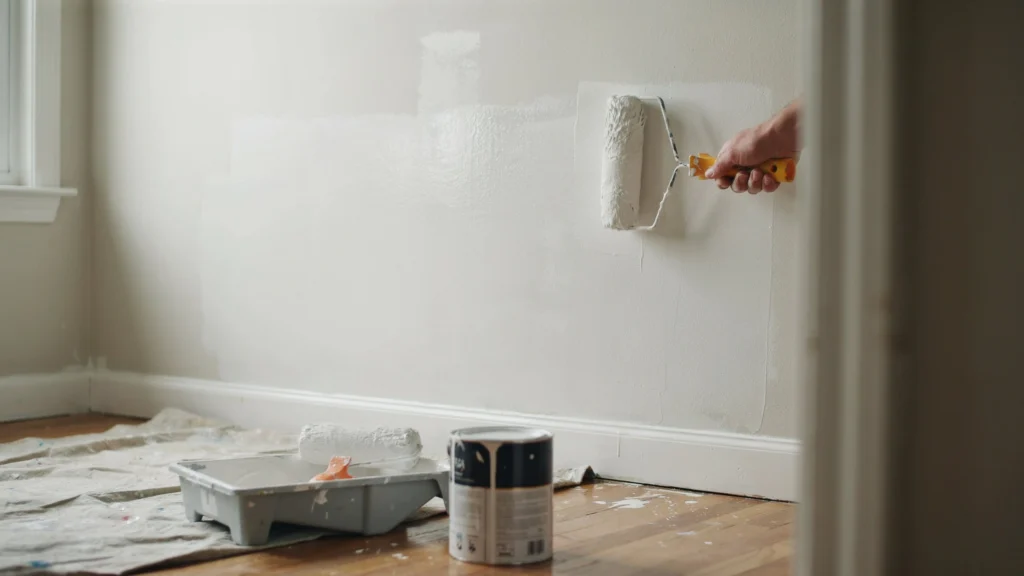
Paint looks different when wet than dry. As it cures, it shrinks slightly, and thin spots that hid under a wet sheen show up in daylight.
Coat count also decides how the wall behaves later. Thicker, even film resists scuffs, wipes clean more easily, and usually goes longer before it needs repainting. A hallway that gets one thin coat will show hand marks and wear much sooner than one with two even coats.
How Many Coats Do You Need? Use the Coat Score Method
Most guides give you a list of situations and leave you to guess which one fits. The Coat Score is a simple rule of thumb we built to turn that guess into a number. It is a practical shortcut, not an industry standard, so treat it as a starting point and confirm it with a test patch.
Coat Score Table
Score each factor for your project, then add the points.
| Factor | 0 points | 1 point | 2 points |
| Color change | Same or very similar color | One shade lighter or darker | Dark to light, or bold red, orange, yellow |
| Surface | Sealed, previously painted | Patched, textured, or slightly stained | Bare drywall, raw wood, heavy stains |
| Paint quality | Premium, high solids | Mid-range | Budget or thin paint |
| Sheen | Flat or matte | Eggshell or satin | Semi-gloss or gloss |
| Light and wear | Soft light, low traffic | Moderate | Strong window light or heavy traffic |
What your total means:
- 0 to 2: One coat may work, with touch-ups.
- 3 to 5: Two coats.
- 6 to 7: Primer plus two coats.
- 8 to 10: Primer plus two or three finish coats.
Example: A bedroom going from beige to a slightly lighter beige, using premium flat paint on a sealed wall with soft light, scores about 1. A patched hallway going from navy to white with mid-range satin scores 7 (color 2, surface 1, quality 1, sheen 1, wear 2). That hallway needs primer plus two coats, and possibly a third.
Test Patch: The 24-Hour Check
Before you commit, paint one section about two feet square near the window, using the coat count your score suggests. Let it dry overnight, then check it in morning and evening light. Hold a phone flashlight at a low angle along the wall to reveal roller texture and thin areas. If the old color ghosts through or the sheen looks uneven, add a coat before you paint the whole room.
When One Coat Is Enough vs When You Need Two or Three
Coat count follows the starting point, not a fixed rule. Here is how the common situations line up.
| Situation | Typical coats |
| Same color refresh, clean sound wall, premium paint | 1, sometimes with touch-ups |
| Lighter over darker, or a clear color change | 2 |
| Patched drywall or new sections | Primer plus 2 |
| Kitchens, hallways, kids’ rooms | 2 |
| Pale color over black or navy | Primer plus 2 to 3 |
| Saturated red, orange, or yellow | 2 to 3 over tinted primer |
Is One Coat of Paint Enough?
Sometimes, but it is rarer than the labels suggest. Marketing claims about one-coat coverage usually assume a similar starting color, a properly prepared surface, and the spread rate printed on the can. When someone asks how many coats of paint are needed and hopes the answer is one, that fine print is where the answer changes.
One coat also carries risks that do not show up on day one. Brushed edges near ceilings and corners often look different from rolled areas, and uneven sheen, called flashing, can appear as the wall dries. A single coat is also thinner protection, so it wears faster where hands, furniture, and cleaning cloths touch it.
Coats Needed by Starting Color and New Color
Color is the biggest variable. This matrix shows total layers, including primer where noted. Use it as an estimate and confirm with a test patch.
| Starting color → New color | Light | Medium | Dark | Bold red or yellow |
| Light | 1 to 2 | 2 | 2 | 2, tinted primer helps |
| Medium | 2, primer if contrast is high | 2 | 2 | 2 to 3, tinted primer |
| Dark | Primer plus 2 (3 to 4 layers) | Primer plus 2 | 2 | Primer plus 2 to 3 |
Going darker is usually easier than going lighter, because deep pigment covers the old color more effectively. Saturated reds and yellows are the exception. Their pigments hide poorly, which is why a gray or tinted primer often saves a full finish coat.
How Many Coats on Walls, Ceilings, Trim, Doors and Cabinets
- Walls: Two coats is the professional baseline. Add primer on new drywall, patches, and dramatic color changes.
- Ceilings: Flat white over a sound white ceiling can sometimes get away with one coat. Water stains need a stain-blocking primer first, or they bleed back through within weeks.
- Trim and baseboards: Two coats of semi-gloss after a light scuff sanding. Glossy finishes reveal every brush mark, so thin coats matter.
- Doors: Two coats, painting panels first and flat areas after. Let them dry fully before closing them, or they can stick in the frame.
- Cabinets: Clean and degloss, apply a bonding primer, then two thin coats. Give them several days before heavy use, since cabinet doors take constant contact.
Coats Needed by Surface Type
| Surface | Recommended approach |
| New drywall | Primer plus 2 finish coats |
| Repaired plaster or patches | Spot prime, then 2 to 3 coats |
| Textured walls | 2 coats, plus extra paint for the added surface area |
| Bare wood | Primer plus 2 coats |
| Sealed or finished wood | 1 primer coat plus 1 to 2 finish coats |
| Metal | Bonding primer plus 2 thin coats |
| Vinyl siding | 2 coats of paint made for vinyl |
| Fences | 1 to 2 coats, depending on wood condition |
| Brick and stucco | Masonry primer plus 2 coats |
Do You Need Primer? How Many Coats?
Not every job needs it, but some surfaces punish you for skipping it. Use primer on bare drywall, stains, glossy surfaces, raw wood, and big color changes. One coat of primer is usually enough. A second is worth it on heavy stains or very porous surfaces that soak up the first layer.
Does “Paint and Primer in One” Save a Coat?
On a simple repaint over a similar color, it can. On bare drywall, stains, or a major color change, it does not replace real primer. These products are thicker paint, and they often cannot block bleed-through or seal porous material.
Factors That Affect Coat Count
- Paint quality: Paints with more pigment and solids hide better in fewer coats.
- Sheen: Glossier finishes show flaws, so changing from flat to satin or semi-gloss usually calls for two full coats.
- Application method: Sprayers lay down a thinner film than rollers, so they often need extra passes.
- Texture: Stucco, brick, and popcorn ceilings have more surface area, so they use more paint per square foot.
How Much Paint Do You Need? Gallons Formula and Room Size Table
Measure the room’s perimeter and multiply by the ceiling height. Subtract about 20 square feet per door and 15 per window. Divide by the coverage rate on your can (commonly 350 to 400 square feet per gallon), then multiply by your coat count.
Example: A 12 by 12 room with 8-foot ceilings has 384 square feet of wall. After one door and one window, that is about 349. Two coats means 698 square feet, which at 375 square feet per gallon is about 1.9 gallons. Buy two.
| Room size | Wall area before openings | Paint for 2 coats |
| 10 by 10 | 320 sq ft | About 2 gallons |
| 12 by 12 | 384 sq ft | About 2 gallons |
| 12 by 15 | 432 sq ft | About 2.5 gallons, buy 3 |
| 15 by 20 | 560 sq ft | About 3 gallons |
Calculate ceilings separately, using length times width. Always round up, because running out mid-wall creates a visible line.
Drying, Recoat and Cure Times
Three different clocks matter: dry to the touch, ready for another coat, and fully cured. Treating them as the same thing is a common cause of lap marks and peeling.
| Condition | What to expect |
| Latex and acrylic (water-based) | Recoat commonly after 2 to 4 hours |
| Oil-based | Often 24 hours between coats |
| High humidity (above about 70%) | Drying can run well past label estimates |
| Cold (below 50°F) | Slow drying, and the paint may not cure properly |
| Full cure | Days to weeks, so wait before scrubbing or hanging heavy items |
Always follow the can, since times vary by product.
Interior vs Exterior Coats in San Diego’s Climate
Interior walls are protected, so primer where needed plus two coats covers most rooms. Exteriors face sun, wind, and moisture, so primer plus two full coats is the baseline, and it is the honest answer to how many coats of paint are needed outside.
Local conditions add a few practical points. Near the coast, morning moisture and salt in the air can interfere with adhesion, so wash the surface and let it dry fully before painting. Inland, strong sun and heat can dry paint too fast on south and west walls, which leaves lap marks. San Diego Home Remodeling recommends painting those walls when they are in shade and checking the temperature range on the can first.
Do More Coats Make Paint Darker? Can You Apply Too Many?
More coats build opacity and richness, but they do not turn a color dramatically darker once the surface is fully covered. What you see after coat two is usually the true color.
You can apply too many, though. Layering without drying time traps moisture and can cause cracking, wrinkling, and peeling. On doors and windows, thick buildup can make them stick.
Does an Extra Coat Cost More in the Long Run?
Take an illustrative example, not a guarantee. Suppose a thin one-coat finish needs a refresh after 2 years, while a properly applied two-coat finish lasts 5. Over 10 years, that is five paint jobs against two. The second coat costs roughly one more gallon and a few hours of labor on a 12 by 12 room, while each repaint repeats the prep, paint, labor, and disruption.
Signs You Need Another Coat
Check in natural daylight after the paint is fully dry:
- The old color or primer shows through
- Roller or brush marks are visible
- Thin spots appear near edges and corners
- The sheen looks patchy from different angles
Tips for Better Paint Coverage
- Buy the best paint your budget allows
- Use quality rollers, which shed fewer fibers
- Keep a wet edge to avoid lap marks
- Stir well before and during the job
- Apply thin, even layers instead of one heavy coat
- Let each coat dry fully before recoating
Final Thoughts
So, how many coats of paint are needed? For most rooms and exteriors, two coats, with primer added when the surface or color change demands it. Use the Coat Score and a test patch to confirm your number before you buy.
If you would rather skip the guesswork, our Painting Services San Diego team at San Diego Home Remodeling can walk your space and tell you exactly what it needs. Contact us for a clear estimate and a finish built to last.
FAQs
How many coats of paint does a bathroom need?
Two coats of moisture-resistant paint is the usual answer. The second coat builds a tighter film against steam and splashes, which reduces water spotting and early wear.
Do I need to sand between coats of paint?
Only if the first coat has drips, brush marks, or dust trapped in it. On a smooth, clean first coat, a wipe with a tack cloth is usually enough.
How many coats do kitchen cabinets need?
Plan on bonding primer plus two thin coats of cabinet-grade paint. Thin layers cure harder and resist the constant contact cabinets get.
Can I apply the second coat the next day?
Yes, as long as the first coat is dry and not tacky. Waiting overnight is often better with oil-based paint or in humid weather.
Is it cheaper to hire a painter or do multiple coats myself?
DIY saves labor cost, but wrong coat counts and poor prep can mean repainting and buying paint twice. A professional typically gets the coat count right the first time, which cuts waste.