Kitchens take more abuse than any other room in the house. Grease splatters, steam clouds the air, and someone is always wiping something down. If you have ever repainted a kitchen only to see the finish peel or dull within a year, you already know regular wall paint does not hold up here.
Finding the best type of paint for kitchens is not about picking a pretty color; it is about matching the paint’s chemistry to a room that gets hotter, wetter, and dirtier than any other space. At San Diego Home Remodeling, we have repainted hundreds of kitchens, and one pattern always holds true: paint jobs last when chosen with the room’s real conditions in mind.
Why Kitchen Paint Needs to Be Different from Regular Wall Paint
A bedroom wall deals with dust and the occasional scuff. A kitchen wall deals with heat rising off the stove, moisture from boiling pots, and a fine layer of cooking oil that settles on every surface within a few feet of the range, even ones that seem “far enough away.”
Three conditions make kitchens uniquely demanding:
Humidity and temperature fluctuations. Every time you boil pasta or run the dishwasher, the air near the walls briefly turns into a mini sauna. Cheap paint absorbs that moisture, swells, and eventually bubbles or peels.
Grease and cooking stains. Airborne oil particles land on walls and cabinets constantly, even during simple tasks like sautéing vegetables. Over months, this builds into a film that ordinary paint cannot release during cleaning.
Frequent cleaning requirements. A kitchen wall might get wiped down two or three times a week. Paint that is not built for repeated scrubbing will show wear, dulling, and burnish marks within the first year.
Understanding these three stressors is the starting point for choosing the best paint for kitchen walls, because every recommendation in this guide traces back to one of them.
What to Consider When Choosing Paint for the Kitchen
Before looking at specific finishes, it helps to know which properties actually matter in a kitchen environment. These are the factors our team at San Diego Home Remodeling walks clients through on every project:
- Washability. Can the paint handle a damp sponge and mild detergent without losing sheen or color?
- Stain resistance. Does grease and tomato sauce wipe off, or does it soak in?
- Mold and mildew resistance. Important near sinks, dishwashers, and any wall that catches steam.
- Low-VOC formulation. Kitchens are enclosed spaces where you cook and breathe daily, so lower off-gassing matters for indoor air quality.
- Sheen level. Higher sheen generally means easier cleaning but also shows more surface imperfections.
Weighing these five factors against your kitchen’s layout, ventilation, and how often you cook will point you toward the right product long before you ever compare paint chip colors.
What is the Best Type of Paint for Kitchens? (Water-Based vs. Oil-Based)
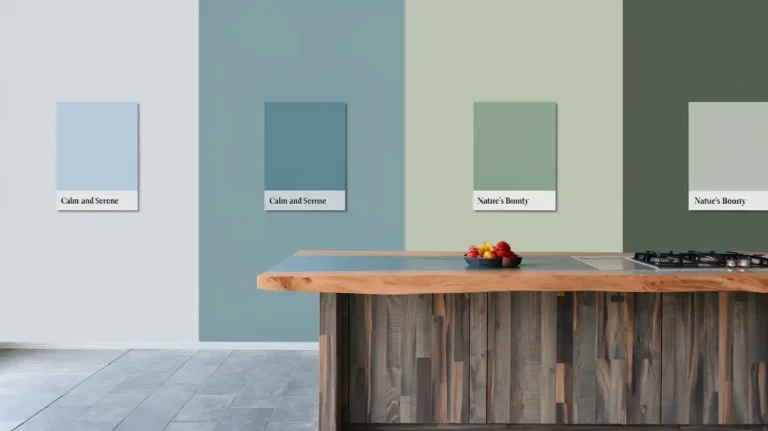
Here is the short answer, since this question deserves a direct response: for most kitchens today, a high-quality water-based (acrylic latex) paint in a satin or semi-gloss finish is the best type of paint for kitchens. Oil-based paint used to be the standard for high-moisture rooms, but modern acrylic formulas have closed the durability gap while avoiding oil paint’s drawbacks.
Durability comparison. Oil-based paint forms a harder shell, which made it popular for cabinets and trim. Modern water-based enamels now match that hardness in most residential applications, especially on walls that are not subjected to constant scraping or impact.
Smell, drying time, and maintenance. Oil-based paint carries a strong solvent odor that can linger for days in a room where you prepare food. It also dries slowly, meaning your kitchen may be unusable for over 24 hours. Water-based paint dries within a few hours and carries a much lighter smell, which matters when the room is central to daily life.
Environmental and health considerations. Water-based paints release fewer volatile organic compounds, which is worth prioritizing in a room where food is prepared and where children often spend time at a kitchen table or island.
The exception is cabinetry, where some homeowners still prefer oil-based or hybrid alkyd enamels for their extra hardness. We will cover that separately below.
Best Paint Finishes for Kitchens
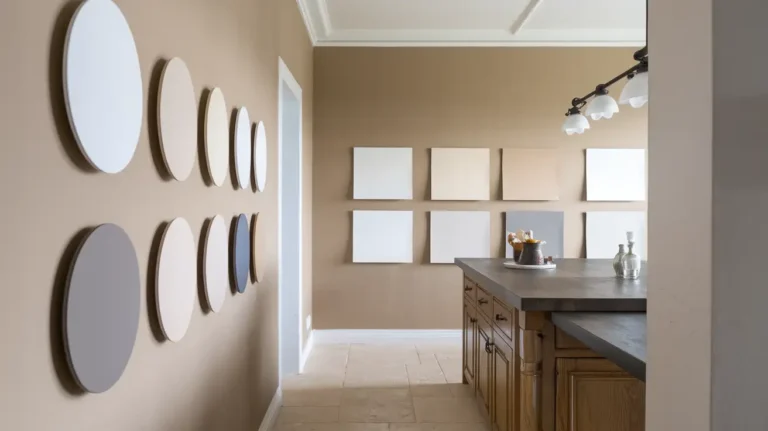
Once you have settled on a water-based formula, the finish you choose determines how the paint performs day to day. Here is how each option holds up in a real kitchen.
Satin Finish
Pros of Satin Finish:
Satin sits in the middle ground between shine and matte, giving you a soft glow that hides minor wall imperfections while still resisting moisture reasonably well. It is a popular pick because it balances washability with a forgiving look on walls that are not perfectly smooth.
Cons of Satin Finish:
It is not as scrubbable as semi-gloss, so stubborn grease stains near the stove may need more elbow grease to remove.
Eggshell Finish
Pros of Eggshell Finish:
Eggshell offers a soft, low-luster look that many homeowners prefer aesthetically, and it hides wall flaws better than shinier finishes.
Cons of Eggshell Finish:
It falls short on grease resistance and repeated scrubbing compared to satin or semi-gloss, making it a weaker choice for walls directly behind cooking areas.
Semi-Gloss Finish
Pros of Semi-Gloss Finish:
This is one of the most recommended options for kitchens because it resists moisture and grease exceptionally well and wipes clean with minimal effort. It is a strong answer whenever someone asks what the best paint for kitchen walls should be in high-splash zones like backsplashes and areas around the stove.
Cons of Semi-Gloss Finish:
The reflective surface highlights every dent, drywall seam, and roller mark, so wall prep needs to be close to flawless before painting.
High-Gloss Finish
Pros of High-Gloss Finish:
Nothing cleans easier than high-gloss, and it holds up well on trim, doors, and cabinetry that get touched constantly.
Cons of High-Gloss Finish:
On large wall areas, high-gloss can look institutional and will exaggerate every surface imperfection under kitchen lighting.
Matte/Flat Finish
Pros of Matte Finish:
Matte paint offers a modern, velvety look and hides wall texture issues better than any other finish.
Cons of Matte Finish:
It absorbs stains rather than releasing them and cannot withstand repeated scrubbing, which is why it is rarely recommended for active cooking zones.
Comparison Table: Finish vs. Durability vs. Ease of Cleaning
Finish | Durability | Ease of Cleaning | Best Used For |
Satin | Good | Good | General kitchen walls |
Eggshell | Fair | Fair | Low-splash areas, dining nooks |
Semi-Gloss | Very Good | Excellent | Backsplashes, high-splash zones |
High-Gloss | Excellent | Excellent | Trim, cabinets, doors |
Matte/Flat | Poor | Poor | Ceilings, accent walls away from cooking |
Is Matte Paint Suitable for Kitchens?
Matte paint is not ideal for the main cooking and cleaning zones of a kitchen, but it can work on ceilings or on accent walls that sit far from the stove and sink. If you love the matte look, save it for areas that will not face grease splatter or regular wiping, and stick to satin or semi-gloss for anything within reach of daily cooking activity.
What Type of Kitchen Paint is Easiest to Clean?
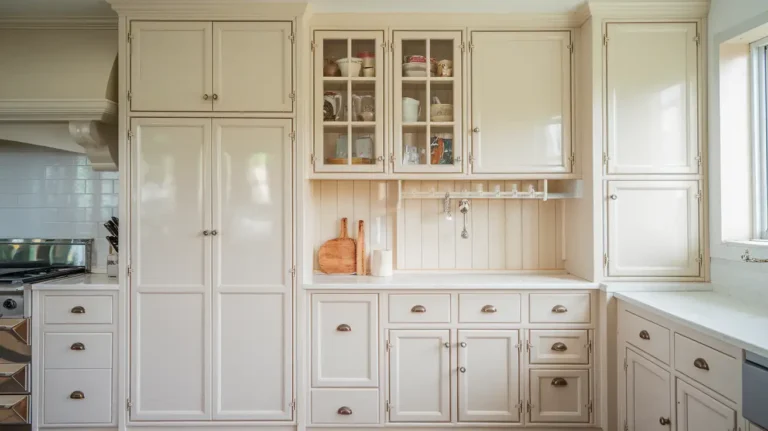
Semi-gloss and high-gloss finishes are the easiest to clean because their smooth, tight surface prevents grease and food residue from soaking into the paint film. A damp cloth with mild soap typically removes stains without leaving a dull patch behind, which is why these finishes remain the top recommendation for anyone prioritizing low-maintenance walls.
Best Paint Type Based on Kitchen Area
Different surfaces in the kitchen benefit from different sheen levels:
- Walls: Satin or semi-gloss for the best balance of look and cleanability.
- Ceiling: Flat or matte works fine here since ceilings rarely get touched or splashed.
- Cabinets: Semi-gloss or high-gloss enamel for durability against handles, hinges, and daily contact.
- Trim and Doors: Semi-gloss or high-gloss to match cabinet durability and resist scuffing.
Beyond the Walls: The Best Paint for Kitchen Cabinets
Cabinets face more physical wear than any wall ever will. Hands open and close doors dozens of times a day, and hinges, handles, and edges take constant contact. For this reason, a hybrid alkyd enamel or a high-quality acrylic enamel in semi-gloss or high-gloss is typically the strongest choice.
Durability considerations matter more here than color trends. A soft finish that looks great on day one can start chipping at corners within months if it was not formulated for high-touch surfaces. We have seen homeowners choose a beautiful matte finish for cabinets only to find fingerprint marks and worn edges near the handles within a single season. Choosing an enamel built for cabinetry, and applying it with proper cure time between coats, prevents that early wear.
Color Considerations for Kitchen Paint
Color choice affects more than aesthetics; it changes how a kitchen feels day to day.
- Light vs. dark colors in small kitchens. Lighter tones bounce natural light around a compact kitchen, making it feel larger and airier, while darker tones can make a small space feel closed in unless the room has strong natural light.
- How lighting affects paint appearance. Kitchen lighting, especially under-cabinet LED strips, can shift how a color reads compared to how it looked on the paint chip. Always test a sample patch under your actual kitchen lighting at different times of day before committing.
- Trending kitchen colors. Soft greens, warm off-whites, and muted blues have been popular recently, but trends fade faster than a well-applied paint job, so choose a color you will still like in five years, not just this season.
The Complete Guide to Painting Your Kitchen
Step 1: Proper Preparation
Wash every wall with a degreasing cleaner before doing anything else. Skipping this step is the single biggest reason kitchen paint jobs fail early, since paint cannot bond properly to a surface with an invisible layer of cooking oil on it. Sand glossy surfaces lightly to give the new paint something to grip.
Step 2: Don’t Skip the Primer
A stain-blocking primer seals in old grease residue and creates a uniform base, especially important if you are covering a dark color with a lighter one or painting over a previously glossy surface.
Step 3: Apply the Paint
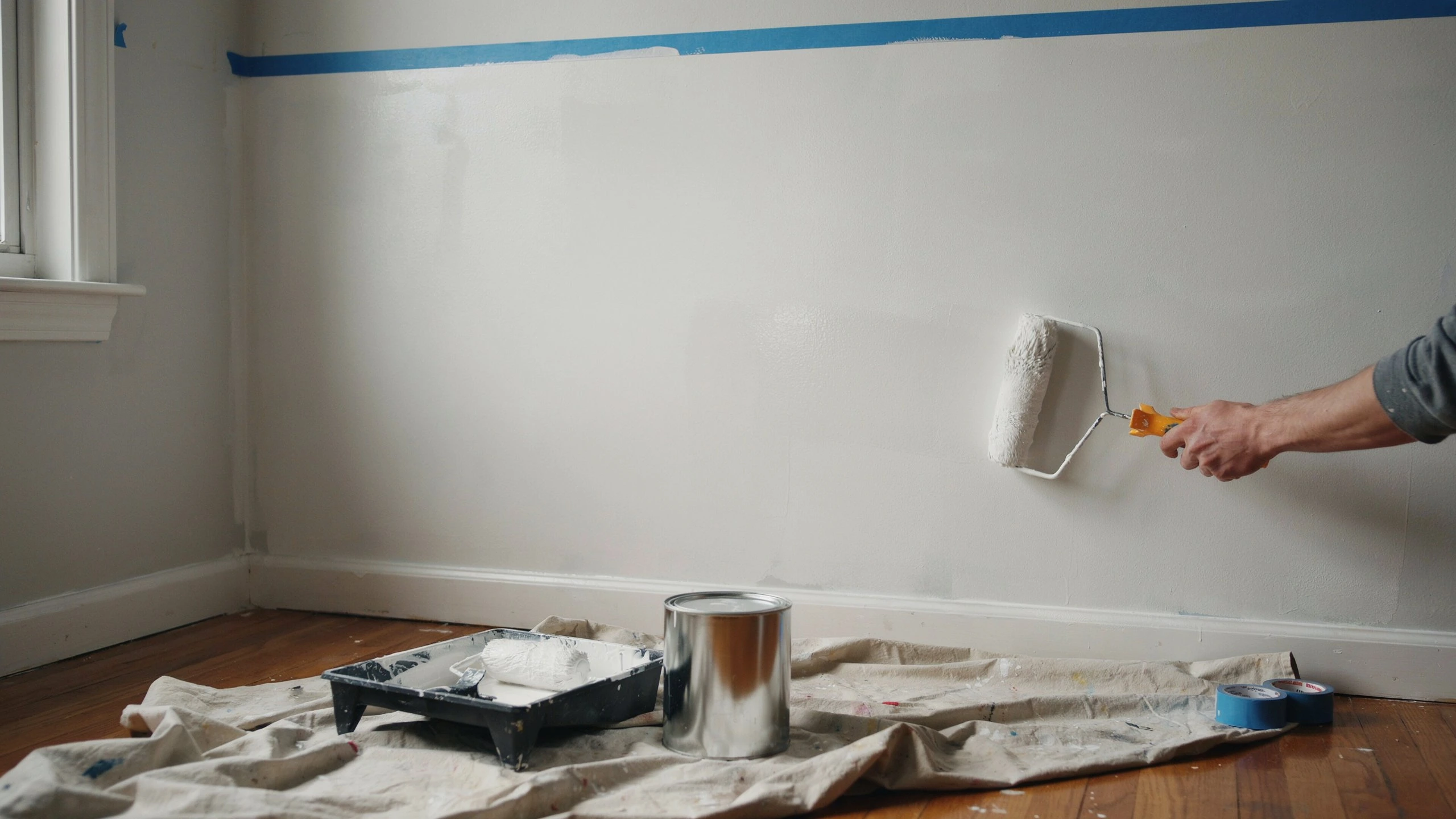
Use a high-quality synthetic brush and roller combination, and apply thin, even coats rather than one thick layer. Two coats almost always outperform one heavy coat in both appearance and long-term durability.
Step 4: Ventilation During and After Painting
Keep windows open and run an exhaust fan during painting and for at least 24 hours afterward. This speeds up curing and reduces the chance of trapped moisture affecting the finish before it fully hardens.
Common Mistakes to Avoid
- Wrong finish for high-moisture areas: Using flat or matte paint directly behind a stove is one of the fastest ways to see peeling within a year.
- Skipping primer: This leads to uneven color, visible old stains bleeding through, and poor paint adhesion.
- Poor ventilation while painting: Trapped moisture during the curing process can cause bubbling and a longer-lasting paint smell.
Expert Tips for a Lasting Paint Job
Keep leftover paint labeled with the finish and date so future touch-ups match exactly, since even the same color can look slightly different if the sheen does not match. Wipe walls weekly with a soft cloth rather than waiting for grease to build up, since fresh grease is far easier to remove than residue that has baked on over weeks. Most kitchens with a quality semi-gloss or satin finish hold up well for seven to ten years before needing a refresh, though high-use areas near the stove may need attention sooner.
Should You Hire a Professional Painter or DIY Your Kitchen?
DIY painting can save on labor costs and works well for homeowners comfortable with prep work, cutting in around cabinets, and working in tight spaces. However, kitchens involve more obstacles than a typical room, including cabinet edges, appliances, tile backsplashes, and outlets that all require careful masking and cutting in.
Professional painters bring experience with these obstacles, proper spray or brush techniques for enamel finishes, and the ability to complete the job faster with a more consistent result. If your kitchen has intricate cabinetry, high ceilings, or you simply want a flawless finish without spending a weekend on prep work, hiring a professional often pays for itself in time saved and finish quality. For homeowners in the area looking for reliable, experienced help, our Painting Services in San Diego team handles everything from wall prep to cabinet enamel application.
Conclusion
Choosing the best paint for kitchen walls comes down to matching the finish to how your kitchen actually gets used, not just how it looks on a sample card. A water-based satin or semi-gloss paint will outperform flat and matte options in nearly every real-world kitchen scenario, and proper prep and priming will add years to your paint job’s life.
If you are ready to give your kitchen a finish that holds up to daily cooking and cleaning, contact us at San Diego Home Remodeling and we will help you choose the right paint for your space.
Frequently Asked Questions
Which finish is most durable for kitchens?
Semi-gloss and high-gloss finishes are the most durable for kitchens because their tight, smooth surface resists moisture, grease, and repeated scrubbing better than lower-sheen options.
Is matte paint suitable for kitchens?
Matte paint works best on ceilings or accent walls away from cooking zones, but it is not ideal near stoves or sinks since it absorbs stains rather than releasing them during cleaning.
Is satin or eggshell better for a kitchen?
Satin is generally the better choice for kitchen walls because it offers stronger moisture and stain resistance than eggshell while still providing a soft, attractive sheen.
How often should kitchen paint be redone?
Most kitchens with a quality satin or semi-gloss finish last seven to ten years before needing a repaint, though areas directly behind the stove may need touch-ups sooner due to heavier grease exposure.
Is washable paint necessary?
Washable paint is strongly recommended for kitchens since walls in this room are cleaned far more often than in any other part of the house, and a non-washable finish will show wear and dulling much faster.