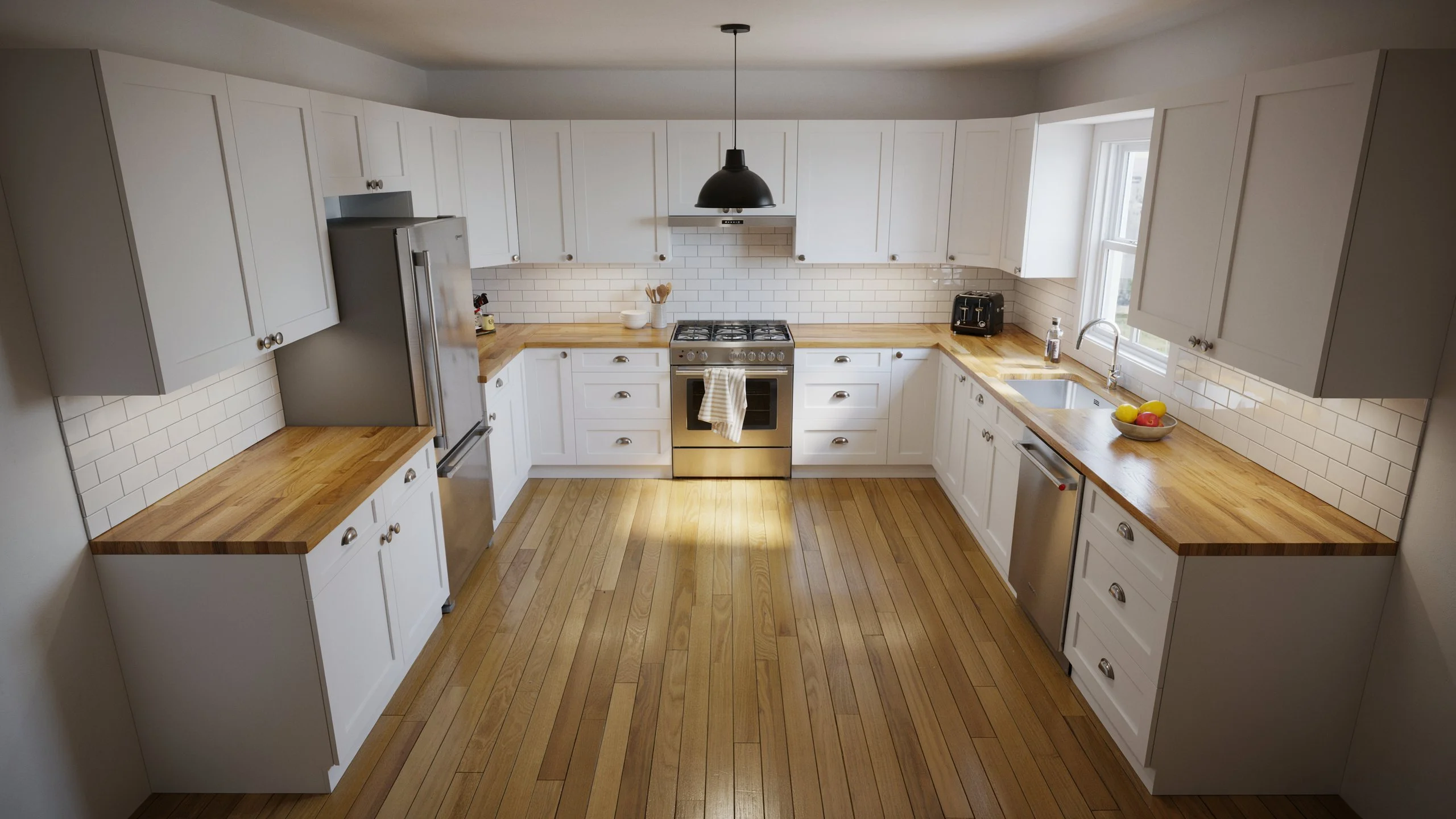
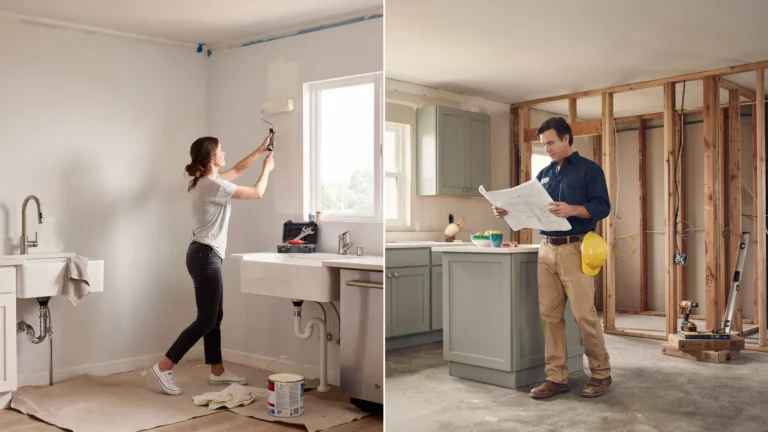
Ask three homeowners what a “remodel” is and you may get three different answers. One means fresh paint and new cabinet pulls. Another means knocking out a wall to open up the kitchen. The third picture is a full gut job. So, is home improvement the same as remodeling? Not quite, and the difference affects your budget, your permits, and who you should hire.
Mixing up the terms can lead to quotes that miss the mark and surprises halfway through a project. San Diego Home Remodeling put this guide together to sort out the terms before you request your first estimate.
The Quick Answer
No. Home improvement is the umbrella term for any project that repairs, upgrades, or enhances a home. Remodeling is one type under that umbrella, defined by a change to a space’s layout, structure, or function. Renovation sits in the middle: it restores or updates what already exists without reshaping the floor plan. When people compare home improvement vs home remodel, they are usually comparing the simplest end of that umbrella with the most complex one.
The Home Project Ladder: From Maintenance to Rebuild
Most guides compare two or three terms. Real projects sit on a ladder, and each rung up usually adds permits, trades, time, and disruption.
- Maintenance: keeps things from failing, such as cleaning gutters or re-caulking a tub.
- Repair: fixes something broken, such as a leaking faucet or a cracked tile.
- Improvement: upgrades looks or comfort, such as paint, fixtures, or new flooring.
- Renovation: restores or updates existing systems and finishes, such as rewiring or refinishing floors.
- Remodel: changes the layout, structure, or purpose of a room.
- Addition or rebuild: adds square footage or replaces the structure.
Rungs one through four all count as home improvement in everyday use. Rungs five and six are where the budget and paperwork change.
What Is Home Improvement?

Home improvement covers work that keeps a house in good shape or makes it nicer without changing its structure: painting, swapping fixtures, replacing flooring, landscaping, or updating hardware. Most of it takes a few days to a few weeks, and many projects need no permit. The resale effect is usually modest and tied to condition and curb appeal rather than function.
What Is Renovation?
Renovation brings an existing space back to good or modern condition. Replacing the old plumbing and wiring in a 1960s house while keeping every room where it is counts as renovation. It is more invasive than a cosmetic update because walls often get opened, but the floor plan stays put. Electrical and plumbing work can still require a permit.
What Is Remodeling?
Remodeling changes the structure, layout, or function of a space. Removing the wall between a kitchen and living room, converting an attic into a bedroom, or turning a dining room into an office with new circuits all qualify.
A useful edge case: moving a kitchen sink to the opposite wall is a remodel, because the plumbing has to move, even though the change looks small. Swapping a tub for a walk-in shower in the same spot is a gray area, and it becomes a remodel once drain or supply lines relocate.
Home Improvement vs Renovation vs Remodeling: Full Comparison
Here is the home improvement vs home remodel question in table form, with renovation added.
| Factor | Home Improvement | Renovation | Remodeling |
| Scope | Cosmetic or functional upgrades | Restoring existing systems and finishes | Layout, structure, or purpose changes |
| Timeline | Days to a few weeks | Weeks | Weeks to months |
| Permits | Rarely | Often, for electrical or plumbing | Almost always |
| Who to hire | Handyman or specialty trade | Licensed contractor | Licensed general contractor, sometimes design or engineering help |
| Disruption | Low | Moderate | High |
| Resale effect | Modest | Protects value | Strongest when it fixes function |
Cost climbs the same way, but your home’s age, materials, and labor rates matter more than any generic range, so ask for a written, itemized estimate.
Pros and Cons of Each Type
- Home improvement: Low cost, fast, little disruption. It will not fix a layout that does not work for you.
- Renovation: Fixes aging systems and prevents bigger failures later. Problems often hide behind walls, so surprises are common.
- Remodeling: Reshapes the home around how you actually live. It has the highest cost, the longest timeline, and required inspections.
60-Second Project Sorter: Which Category Is Your Project?
Answer these five questions about your project:
- Will a wall, window opening, or structural support change?
- Will plumbing, gas, or electrical lines move to a new location?
- Will the room serve a different purpose afterward?
- Will you need to open walls or floors?
- Will square footage grow?
If you said yes to question 5, you are looking at an addition. A yes to 1, 2, or 3 means a remodel. A yes only to 4 points to renovation. All no’s means home improvement.
| Project | Category | Permit usually needed? |
| Repainting a living room | Improvement | No |
| Refinishing hardwood floors | Renovation | No |
| Replacing a water heater | Renovation | Yes |
| Rewiring a house | Renovation | Yes |
| Moving a kitchen sink | Remodel | Yes |
| Removing a wall between rooms | Remodel | Yes |
| Converting a garage to living space | Remodel | Yes |
| Adding a bedroom | Addition | Yes |
Permits and Licensing in San Diego and California
At San Diego Home Remodeling, we suggest settling the permit question before you compare bids, since it shapes both the timeline and the price.
When You Need a Permit
Permits generally apply when you change structure, move or add plumbing, gas, or electrical lines, replace a water heater, or convert space such as a garage. Painting, new hardware, and fixture swaps in the same spot usually do not need one. Rules vary by jurisdiction, so check with the City of San Diego Development Services or your local building department before work starts.
How to Vet a Licensed Contractor
California requires a contractor license for most projects of $1,000 or more in labor and materials. Confirm the license number and its active status on the Contractors State License Board website, then ask for proof of liability insurance and workers’ compensation. Request references from projects similar to yours. If anyone suggests skipping the permit to save money, treat that as a red flag, since unpermitted work becomes your problem at resale.
Taxes, Insurance, and Appraisals
Cost Basis and Current Tax Credits
Capital improvements, such as a room addition or a kitchen remodel, can raise your home’s cost basis, which may reduce your taxable gain when you sell. Routine repairs and maintenance generally do not count, so keep receipts and permits. Federal residential energy credits available in earlier years were scheduled to end after 2025, so confirm what applies now on the IRS website or with a tax professional.
Insurance Reporting and Unpermitted Work at Appraisal
Tell your insurer about additions and major remodels, because higher rebuild costs can leave you underinsured. At appraisal, unpermitted space such as a converted garage is often left out of livable square footage, which can lower your value during a sale or refinance.
How to Pay for Each Type of Project
Small improvements are often paid from savings. Larger renovations and remodels commonly use a personal loan, a home equity loan, or a home equity line of credit, and each carries different rates and risks, so compare terms with your lender. California also limits the down payment on most home improvement contracts to 10 percent or $1,000, whichever is less, so be cautious about large upfront demands. Confirm current limits with the state contractors board.
Can You Live at Home During Work?
Improvement work usually lets you stay put. Renovation may interrupt water, power, or heat for stretches. A kitchen or bathroom remodel can mean weeks without that room, plus dust and noise. If your home was built before 1978, federal lead-safe work rules apply to many projects that disturb painted surfaces, so ask how the crew will contain dust. For multi-room remodels, plan for temporary housing or a staged schedule.
DIY or Licensed Pro?
Painting, shelving, hardware, and simple fixture swaps with the power off suit most homeowners. Load-bearing walls, gas lines, electrical panels, and structural framing belong to licensed professionals, and DIY on those can create safety risks and insurance disputes. Remember that a simple project becomes a remodel the moment a wall or utility line moves.
When Rebuilding Makes More Sense Than Remodeling
Sometimes a remodel is the wrong tool. If the foundation or framing is failing, or the scope approaches the cost of new construction, rebuilding may give a better result with fewer surprises. Ask a general contractor or structural engineer for a side by side comparison before committing. Large, multi-room changes go more smoothly when a team experienced in San Diego Whole Home Remodeling is involved from the planning stage.
The Real Cost of Getting the Category Wrong
- Underbudgeting: Pricing a layout change with improvement-level numbers leaves you short halfway through.
- Skipped permits: Unpermitted work must be disclosed at sale and can delay closing.
- Wrong professional: A handyman cannot take on structural work, and the project may stall or fail inspection.
- Mismatched bids: When each contractor assumes a different category, bids cannot be compared fairly.
How to Word Your Quote Request So You Get the Right Estimate
Describe what stays and what moves, not just a label. Instead of “I need a kitchen remodel,” try: “We want to keep the current layout, replace cabinets and counters, and repaint. The sink, stove, and walls stay where they are.” Or: “We want to remove the wall between the kitchen and dining room and relocate the sink.” Mention whether you want permits handled and ask for an itemized bid, so every quote covers the same scope.
Final Thought
So, is home improvement the same as remodeling? No. Improvement is the broad category, and remodeling is the most involved type within it. Knowing where your project sits on the ladder helps you budget honestly, ask about the right permits, and hire the right professional. If you are still unsure, contact us at San Diego Home Remodeling for a straightforward consultation.
Frequently Asked Questions
Is home improvement the same as remodeling when it comes to cost?
No. Home improvement spans small, low-cost updates, while remodeling involves construction, permits, and multiple trades, so it almost always costs more. Get an itemized estimate to see exactly where the money goes.
Does remodeling raise property taxes in California?
New construction or an addition can trigger a reassessment of the added portion, not necessarily the whole home. Routine maintenance and repairs generally do not. Check with your county assessor before a large project.
Can I live at home during a remodel?
Often yes for small projects, but kitchen and bathroom remodels can remove key rooms for weeks. Ask your contractor for a phased schedule and plan temporary alternatives for cooking and bathing.
Do I need a permit for home improvement work?
Painting and like-for-like fixture swaps usually do not. Anything that touches structure, plumbing, gas, or electrical lines often does, so confirm with your local building department first.
What is the difference between renovation and remodeling?
Renovation restores or updates what is already there, while remodeling changes the layout or function. Rewiring a house is renovation, and relocating the kitchen sink is a remodel.