Most people who own a home see a damaged wall or an old bathroom and say, “I’ll take care of it later.” Does that sound familiar? The trouble is that “later” develops into years, and tiny problems silently evolve into big ones. If you’re searching for practical home improvement tips that actually work without draining your savings, you’re in the right place.
Here’s the short answer: the best home improvements start with a clear plan, a realistic budget, and knowing which projects deliver the most value. Whether you’re patching a wall, refreshing a bathroom, or boosting curb appeal, this guide walks you through 20 expert-backed tips, a common mistakes section competitors skip, and a clear guide on when to call in a professional.
Key Takeaways
- Fix maintenance issues before jumping into cosmetic upgrades
- A 10% contingency fund saves you from budget surprises
- DIY works for most cosmetic projects; structural and electrical work needs a licensed pro
- Small changes like lighting and paint finishes deliver outsized visual results
- Prioritize projects by urgency, ROI, and your actual skill level
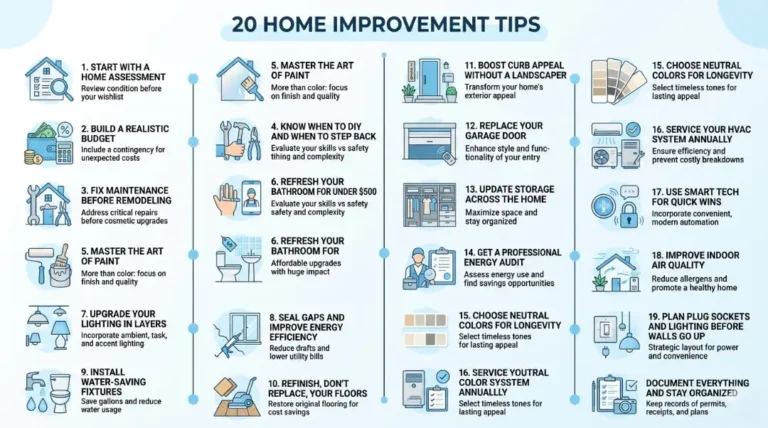
20 Expert Home Improvement Tips and Tricks
1. Start With a Home Assessment, Not a Wishlist
Before you buy any paint, go through each area and make a list of what needs to be fixed and what you want to change. Fix anything that needs to be done right away, such as leaky pipes, old wiring, or broken gutters. You can wait to make cosmetic changes, but you can’t wait to fix structural problems.
According to the National Association of Realtors, deferred maintenance can reduce a home’s value by up to 10%.
2. Build a Realistic Budget With a Contingency
One of the most overlooked home improvement tips is the contingency fund. Add 10-15% on top of your estimated project cost. Unexpected issues like hidden water damage or outdated wiring behind walls are common, especially in older homes.
3. Fix Maintenance Before Remodeling
Don’t install new granite countertops if your plumbing is 30 years old. You’ll likely tear everything out within a few years to fix what was already broken underneath. Think of maintenance as the foundation that holds your upgrades together.
4. Know When to DIY and When to Step Back
Some DIY home improvement projects are genuinely beginner-friendly: painting walls, installing a backsplash, replacing cabinet hardware, or laying peel-and-stick flooring. Others, like moving load-bearing walls or rewiring outlets, are not. Attempting the wrong project costs more than hiring a pro from the start.
A HomeAdvisor survey found that 35% of DIY projects end up costing more than if a professional had been hired due to mistakes and rework.
5. Master the Art of Paint (It’s More Than Color)
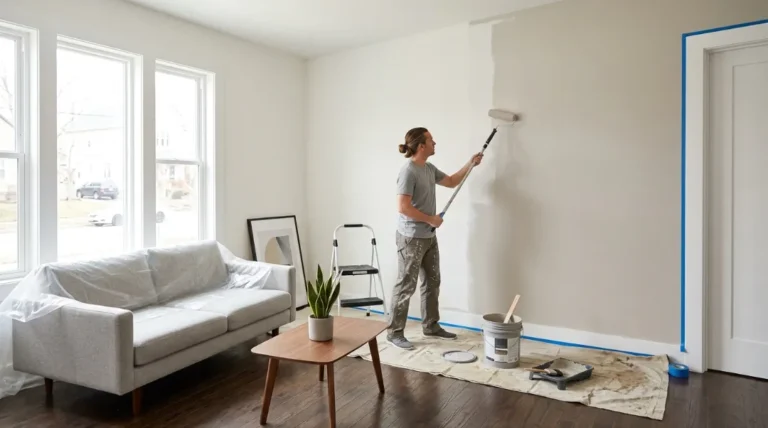
People usually choose a hue and move on. But most people don’t know how much of a difference contrast paint finishes can make. Use a matte finish on the walls and a gloss finish on the trim or woodwork. It makes any room look deeper without spending any more money on decor.
6. Refresh Your Bathroom for Under $500
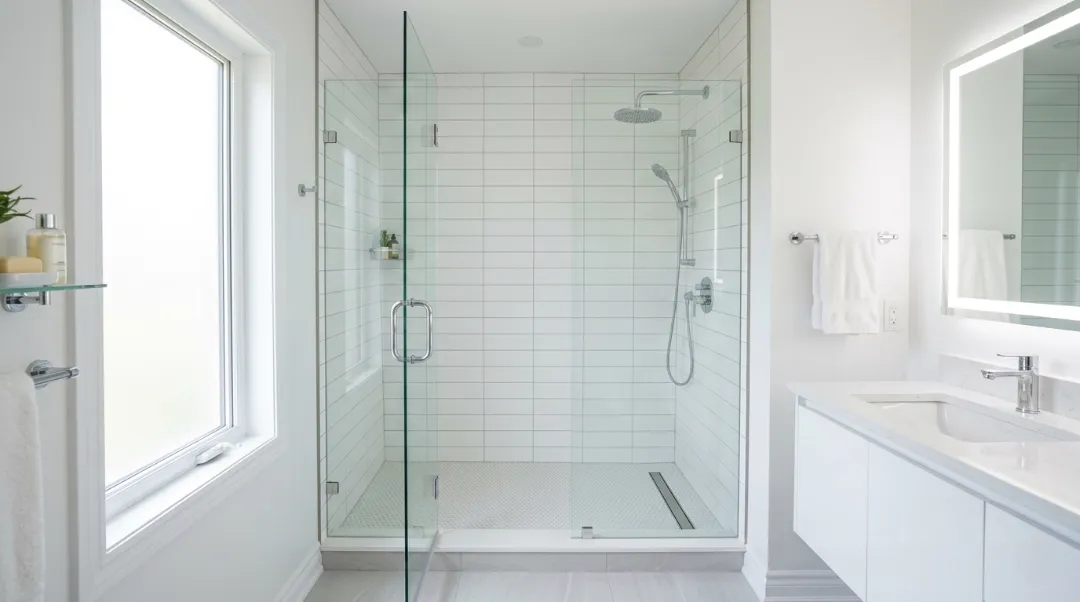
A full bathroom remodel can cost tens of thousands, but simple home improvements can transform the space for a fraction of that. Re-caulk the tub, clean or replace grout, swap out the vanity faucet, and add a new mirror. That’s a bathroom that looks modern without the renovation price tag.
7. Upgrade Your Lighting in Layers
A single overhead bulb makes even a beautiful room feel flat. Layer your lighting by mixing floor lamps, wall sconces, and pendant lights. Good lighting is one of the most underrated home improvement ideas that requires no structural changes and costs very little.
8. Seal Gaps and Improve Energy Efficiency
Look for holes around windows, baseboards, and outside doors. A cheap tube of caulk can stop drafts that slowly raise your energy expenditures every month. Two more cheap things you can add to your home to keep it warmer in the winter and cooler in the summer are blackout curtains and pipe insulation.
The U.S. The Department of Energy estimates that sealing air leaks can reduce heating and cooling costs by up to 20%.
9. Install Water-Saving Fixtures
Swapping your showerhead and faucets for low-flow models is one of the simplest diy home improvement tips that pays for itself within months. A dual-flush toilet cuts water use significantly compared to a standard model. These aren’t just eco-friendly choices; they’re budget-friendly ones.
10. Refinish, Don’t Replace, Your Floors
Hardwood floors hiding under old carpet are worth uncovering. Sanding and refinishing existing hardwood costs a few hundred dollars compared to thousands for new flooring. If the floors are in decent shape, this is one of the highest-ROI tips for remodeling your home you’ll find.
11. Boost Curb Appeal Without a Landscaper
Fresh mulch, trimmed hedges, a painted front door, and exterior path lighting change how your home looks from the street. According to Remodeling Magazine, garage door replacement has an average return of 92% at resale. That’s one of the best single investments for how to add value to your home without a full renovation.
12. Replace Your Garage Door
It doesn’t look good, but it works. In annual remodeling reports, a new garage door is always one of the best projects for getting a good return on investment. Semi-custom alternatives make your home seem nice without the cost of a fully personalized build.
13. Update Storage Across the Home
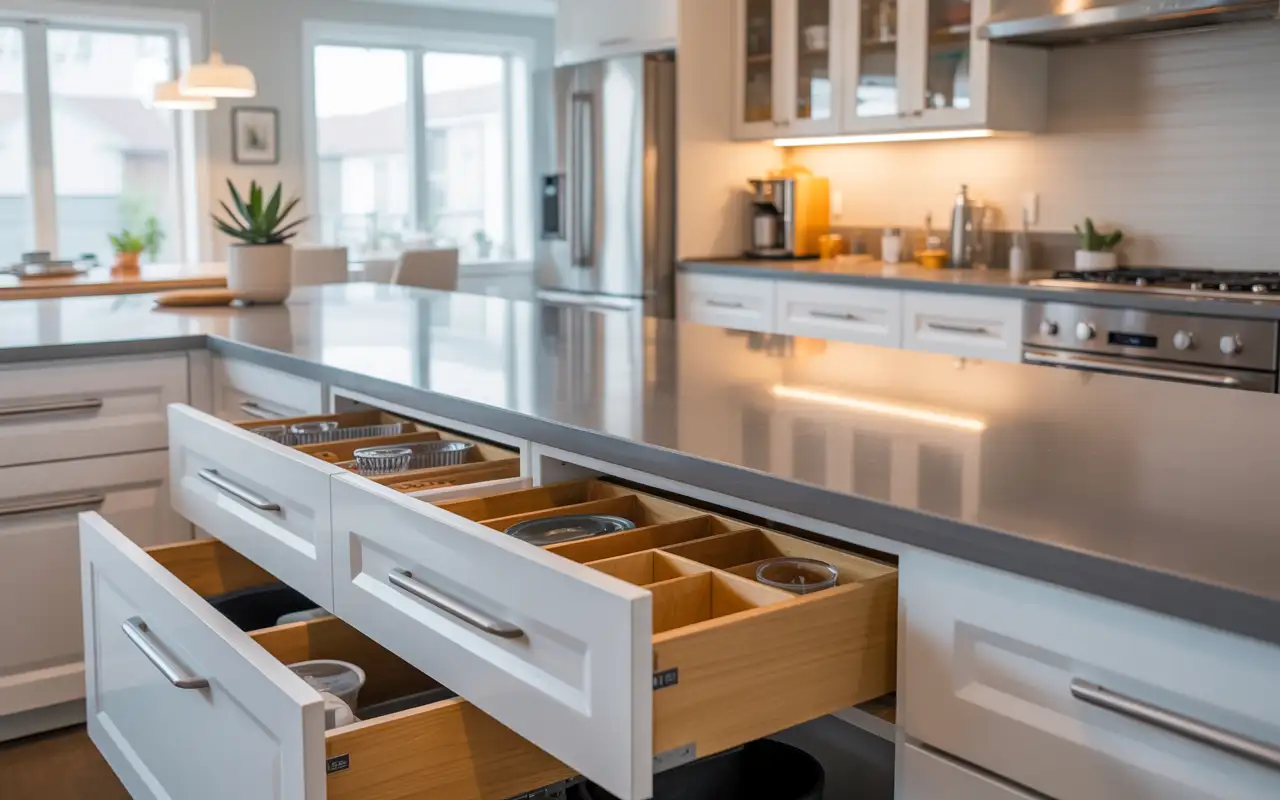
Older homes especially suffer from limited storage. Installing a closet organization system in bedrooms, entry closets, or pantries takes a weekend and costs far less than adding square footage. Better storage makes a home more functional and more appealing to future buyers.
14. Get a Professional Energy Audit
A certified energy auditor reviews your insulation, ductwork, heating, and cooling, then identifies exactly where your home is losing money. Many utility companies offer free or discounted audits. This one step can point to several simple home improvements that pay back within a single season.
15. Choose Neutral Colors for Longevity
Colors that are in style go in and out rapidly. You can change the look of a space without having to paint it again if the walls are a neutral color. It also makes it more appealing to a wider spectrum of purchasers if you ever choose to sell.
16. Service Your HVAC System Annually
An HVAC system running at reduced efficiency costs you money every month. A professional annual service keeps it running cleanly and extends its lifespan. It’s one of those tips home improvement veterans swear by and beginners consistently skip.
17. Use Smart Tech for Quick Wins
Smart thermostats, motion-sensor lighting, and programmable outlet timers are genuinely beginner-friendly upgrades. Most install without an electrician and start saving on energy bills immediately. They also add a layer of appeal that modern buyers actively look for.
18. Improve Indoor Air Quality
Older carpets trap allergens, dust, and contaminants that circulate through your living space. Replacing them with hardwood, tile, or laminate flooring is one of the most practical diy projects for home improvements that also makes cleaning easier long-term.
19. Plan Plug Sockets and Lighting Before Walls Go Up
If you’re doing any significant renovation, map out where every plug socket, light switch, and radiator should go before the walls are closed. Fixing this after the fact means opening walls back up. Print a floor plan and mark every placement before work begins.
20. Document Everything and Stay Organized
Keep written records of all agreements with contractors, modification orders, receipts, and measurements. Use masking tape to jot down measurements right on the surfaces where you need them. This tiny practice will save you a lot of time on any home renovation tips and tricks job you do.
Common Mistakes Homeowners Make (And How to Avoid Them)
This is a section both top-ranking competitors skipped entirely. It fills a gap that many homeowners genuinely need answered.
- Skipping permits: Many structural, electrical, and plumbing changes require permits. Skipping them can create legal issues when you sell.
- Over-improving for the neighborhood: Adding a $60,000 kitchen to a street where homes sell for $200,000 rarely returns full value. Match your investment to your local market.
- Choosing trends over timelessness: Shiplap walls and open shelving look dated within a decade. Classic finishes hold value longer.
- Hiring on price alone: The cheapest contractor quote often hides corners being cut. Always check BBB ratings and ask for references from recent jobs.
- Ignoring seasonal timing: Exterior painting in rain-prone seasons or HVAC installation in peak demand months costs more. Planning around seasons saves money.
When Should You Call a Professional?
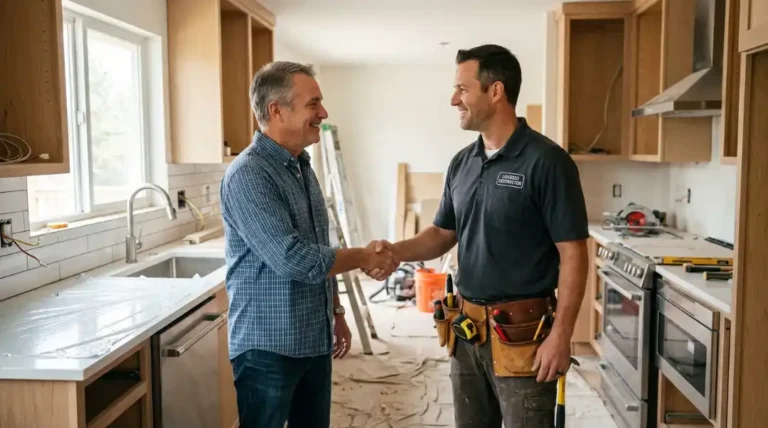
You should call a professional when a project involves structural changes, electrical panels, plumbing rerouting, gas lines, or anything that requires a permit. These aren’t areas where trial and error is an option. A single mistake can create safety hazards, void your insurance, or fail a future home inspection.
For homeowners in Southern California, finding a licensed contractor who understands local building codes is particularly important. If you need home remodeling services in San Diego, San Diego Home Remodeling offers experienced, code-compliant work across kitchen renovations, bathroom upgrades, and full-scale remodels. Getting a professional for the technical work also means your DIY efforts on the cosmetic side won’t be undone by hidden structural problems.
Conclusion
Home improvement doesn’t have to mean maxing out a credit card or tearing everything down to start fresh. The smartest projects are often the simplest: seal the gaps, refresh the paint, fix what’s broken, and invest where it counts. Start small, stay consistent, and build momentum project by project.
FAQs About Home Improvement Tips and Tricks
What are the best home improvement projects for beginners?
Painting walls, replacing cabinet hardware, installing peel-and-stick backsplash, and refreshing bathroom fixtures are all beginner-friendly. They require basic tools and produce visible results without major risk.
How do you add value to your home on a small budget?
Focus on curb appeal, kitchen and bathroom refreshes, and energy-efficient upgrades. These three areas consistently deliver the strongest return on investment according to Remodeling Magazine’s annual Cost vs. Value Report.
How much should I budget for a home improvement project?
A general rule is to set aside 1-3% of your home’s value annually for maintenance and improvements. Always add a 10-15% contingency buffer for unexpected costs.
What permits do I need for home renovation?
Permit requirements vary by location and project type. Structural changes, electrical work, plumbing, and room additions typically require permits. Check with your local building department before starting any significant work.
Is DIY home improvement worth it?
For cosmetic upgrades, yes. For technical work involving safety systems, the risk of error usually outweighs the savings. A botched electrical job or a plumbing mistake costs far more to fix than a professional would have charged upfront.